A/B testing lead capture without you lifting a finger
Updated
Lead capture optimization for contractors — testing message timing, response variations, and conversation scripts — sounds straightforward until you realize who’s supposed to be doing it. With a DIY tool, the platform gives you the capability to run split tests, adjust timing sequences, and analyze response rates. But capability and execution are different things. The contractor who’s supposed to log in, set up the test, review the results two weeks later, and implement the winning variant is the same contractor who hasn’t had time to open the platform in three weeks. A managed service does the optimization for you. That’s the actual difference, and it’s more significant than it sounds.
Key takeaways
- Lead capture optimization for contractors involves testing specific variables — message wording, send timing, follow-up cadence, and call-to-action phrasing — not abstract “improvements.”
- DIY platforms give you the capability to A/B test, but busy contractors rarely run tests because it requires consistent time they don’t have.
- A managed service runs structured message tests, monitors baseline performance, and adjusts messaging seasonally — all without requiring your involvement.
- Continuous optimization compounds over time: small improvements in reply rates and booking rates can add tens of thousands in annual revenue from the same lead flow.
- Renovation homeowners respond differently by season and market condition — static sequences degrade in performance when not adjusted.
What does lead capture optimization for contractors actually involve?
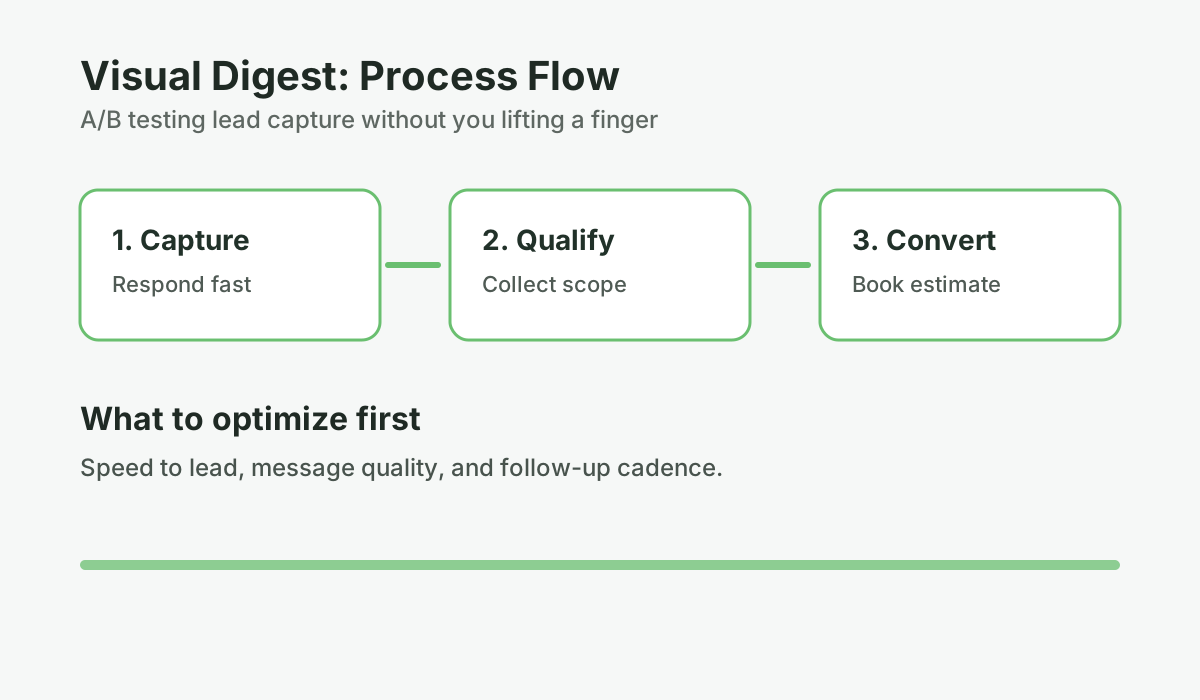
Lead capture optimization is the systematic process of testing and refining the messages, timing, and conversation flows used to respond to new inquiries and follow up on estimates — with the goal of increasing reply rates, booking rates, and ultimately closed jobs from the same lead volume.
“Optimization” in the context of lead capture isn’t abstract. It refers to specific, measurable decisions: which message version gets a higher response rate, what time of day follow-up texts perform best, how long to wait before the second follow-up on a cold estimate, whether a direct question or a softer check-in produces more replies.
These aren’t one-time decisions. Response patterns shift with seasons, with local market conditions, with changes in homeowner behavior. A timing that worked in January may underperform in October. A message that got responses when the renovation market was slower may need adjustment when contractors are booked out for months and homeowners are chasing them instead of the other way around.
Continuous optimization means someone is actually watching these numbers, running controlled tests, and adjusting the system based on what the data shows — on an ongoing basis, not once during setup.
What lead capture optimization contractors should actually measure
| Variable Being Tested | What Gets Measured | Why It Matters |
|---|---|---|
| First response message wording | Reply rate within 24 hours | A casual, warm opener often outperforms a formal one; testing reveals your audience’s preference |
| Response timing (fast vs 2-minute delay) | Reply rate, conversion to booked estimate | A fast response can feel robotic; a brief delay can feel more human Source: Drift Conversational Marketing Report, 2022 |
| Follow-up cadence (Day 2 vs Day 3 second touch) | Response rate, unsubscribe rate | Too close together feels pushy; too far apart loses momentum |
| Estimate follow-up message tone (check-in vs question) | Reply rate on cold estimates | “Just checking in” vs “Did you have any questions about the estimate?” produce different results by trade |
| Time of day for follow-up sends | Open rate, reply rate | Renovation homeowners have different reading patterns than office workers; evening sends often outperform morning Source: Klaviyo Email Benchmark Report, 2023 |
| Call-to-action specificity (“Are you still considering?” vs “Can I answer any questions?”) | Reply rate, booking rate | Specificity reduces cognitive load; vague prompts get ignored |
Why do DIY optimization efforts stall for contractors?
Every major lead capture platform — GoHighLevel, ActiveCampaign, Keap — gives you the technical ability to run A/B tests. You can split your contacts, set up variant messages, define a success metric, and let the test run. The capability is there.
The gap is in the doing. Here’s the realistic sequence of events when a busy renovation contractor tries to run message optimization on their own:
- They set up an initial sequence during onboarding. It works reasonably well. Good enough.
- They intend to come back and optimize, but the next job starts and they’re busy for six weeks.
- By the time they think about testing again, they’re not sure what’s performing well or poorly because they haven’t been reviewing the data.
- Setting up an actual A/B test requires time they don’t have, familiarity with the platform they haven’t maintained, and a clear hypothesis about what to test — which requires understanding the current performance data.
- They don’t test. The original sequence runs indefinitely, regardless of whether it’s performing well or declining.
This isn’t a failure of discipline. It’s a realistic consequence of running a business where your primary job is physical construction work, not marketing analytics. The same pattern shows up with tracking your follow-up pipeline — the data is available, but without someone actively watching it, quotes slip through unnoticed.
How does managed optimization work in practice?
When someone else is running your system, optimization becomes part of their job description rather than yours. Here’s what that means practically:
Baseline performance monitoring
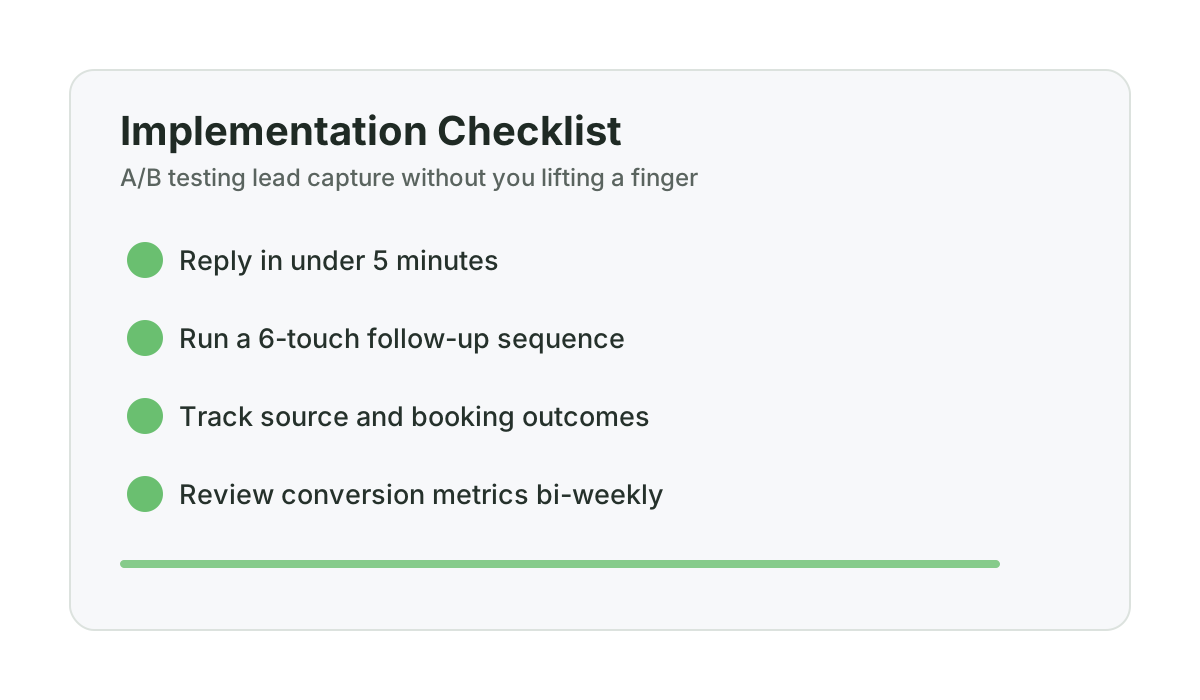
Every sequence has baseline metrics tracked from the start: first-response reply rate, estimate follow-up response rate, appointment booking rate from initial contact, show-up rate on booked appointments. These numbers are compared week over week and month over month. When something drops, it triggers an investigation rather than going unnoticed for months.
Structured message testing
Rather than guessing which message variation is better, a managed service runs controlled tests. Two versions of the same message go to similar segments. After enough volume to be statistically meaningful, the winner gets rolled out and the test moves to the next variable. This is how subject lines get refined, how timing gets calibrated, and how conversation openers get sharpened over time.
A renovation contractor doing 20 to 50 estimates per month generates enough data within two to three months to make meaningful optimization decisions. A managed service captures and uses that data. A DIY tool stores it, available if you ever log in to look.
Another tool, or a system that actually runs?
Use this decision guide to figure out what you actually need: more software (that you won't use) or a managed service that delivers the outcome.
Run the numbers for your business: Use the Service vs App guide. It takes 2-3 minutes and gives you a clear baseline before your next estimate round.
Seasonal and market adjustments
Renovation demand in Alberta has a predictable seasonal pattern. The indoor renovation season — basements, kitchens, bathrooms — peaks from October through March when outdoor work slows. Summer is busy with decks and exterior work but slower for interior bookings. Lead behavior shifts accordingly.
When homeowners are comparing three contractors in a slower market, persistent follow-up matters more. When contractors are booked six months out and homeowners are trying to get on your calendar, the conversation changes. A managed optimization approach adjusts messaging to match these conditions. A static DIY sequence runs the same messages regardless of whether you’re chasing leads or leads are chasing you. This is especially relevant for weekend inquiries, where homeowner intent and urgency look different from weekday leads.
Conversation quality review
Quantitative metrics (reply rates, booking rates) tell you what’s happening, but reviewing actual conversations tells you why. A managed service reviews conversation transcripts regularly to identify patterns: common questions the AI is deferring that could be pre-answered, objection types that are recurring, conversation threads that go cold at a particular point. These qualitative insights drive improvements that pure metric analysis would miss.
How does continuous optimization compound over time?
The compounding effect of optimization refers to how small, incremental improvements to message timing, wording, and follow-up cadence accumulate over months — producing measurably higher reply rates, booking rates, and revenue from the same lead volume without increasing marketing spend.
This is the part that’s easy to understate. A system that goes live at baseline performance and runs unchanged for a year is a system that’s leaving improvement on the table the entire time. A system that gets continuously optimized compounds its performance month over month.
Consider a contractor with a 5% estimate-to-booking rate from follow-up sequences (meaning 5 out of every 100 cold estimates eventually respond to follow-up and book). Six months of optimization — better message timing, refined language, improved conversion questions — might move that to 8%. On 30 estimates per month, that’s an additional 0.9 jobs per month from the same lead flow. At $45K average project value, that’s $40,000 in additional annual revenue from a sequence improvement. To understand how to calculate whether that math works for your business, see the revenue leak calculator.
Nobody performs this optimization on a DIY platform without dedicated time and consistent attention. It happens naturally in a managed service because optimization is part of what you’re paying for.
What managed optimization doesn’t cover
It doesn’t mean blind experimentation. Changes to your AI’s knowledge base or core messaging approach go through a review process — you’re not going to log in one day and find that the AI is saying something completely different. Optimization happens at the level of message timing, wording refinements, follow-up cadence, and conversation flow. Your business positioning, your services, and your communication guardrails stay consistent.
It also doesn’t mean you’re uninformed about what’s changing. The bi-weekly performance report includes a section on what was tested, what was changed, and what the results looked like. You stay informed without having to log in and dig through dashboards.
The honest comparison: capability versus execution
If you’re evaluating lead capture tools and managed services side by side, the most important question isn’t “which platform has better A/B testing features?” It’s “which option will actually produce optimized performance 12 months from now?”
A DIY platform with robust testing features, managed by someone who rarely logs in, will not be optimized 12 months from now. It will be running the same initial configuration with the same initial performance, maybe slightly degraded as communication patterns have shifted and no adjustments were made.
A managed service with a dedicated optimization process will be measurably better 12 months from now than it was in month one. That compounding improvement is what makes the ongoing investment rational — not just the baseline automation, but the continuous refinement on top of it.
Frequently asked questions
What is lead capture optimization for contractors?
Lead capture optimization means testing and refining the messages, timing, and conversation flows used to respond to new inquiries and follow up on estimates. Variables include: what the first response message says, how quickly it sends, what the second follow-up looks like, when to send it, and what call-to-action drives the most replies. Small improvements in these variables compound over time into meaningfully higher response rates and booking rates.
How much does message timing actually affect response rates?
Timing has a measurable effect on both open rates and reply rates. Research from Klaviyo and similar platforms consistently shows that the best send times vary by audience type. For renovation homeowners — who are typically reading messages in the evening after work — evening sends between 6 PM and 8 PM often outperform morning sends. The specific optimum varies by business and geography, which is why testing rather than assuming matters.
Can’t I just set up the sequence once and leave it running?
You can, and many contractors do. A static sequence set up at baseline is still better than no sequence at all. But homeowner communication patterns shift, seasonal market conditions change, and whatever your current response rates are, they often improve with testing. “Set and forget” is better than nothing. Continuous optimization is better than set and forget.
Do I get visibility into what’s being changed in a managed service?
Yes. A properly run managed service includes bi-weekly reporting that covers what was tested, what was changed, and what the data showed. You stay informed without having to manage the process yourself. If a proposed change involves something significant — a change to how the AI handles pricing questions, for example — that gets reviewed with you before implementation.
How long does it take to see meaningful optimization results?
Most contractors doing 15 to 40 estimates per month accumulate enough data for statistically meaningful comparisons within two to three months. Early optimizations — timing adjustments, small message refinements — often show measurable improvements within four to six weeks. The compounding effect of continuous optimization becomes most visible after six to twelve months of consistent operation.
Want help applying this to your pipeline?
Use the matching diagnostic tool first, then book a quick strategy call if you want a done-for-you rollout.

Mashrur Rahman
Founder, ConversionSurgery
I build revenue recovery systems for renovation contractors. After seeing how much money remodelers lose to slow follow-up and missed calls, I built a managed service that handles lead response, estimate follow-up, and after-hours capture automatically. The data in these articles comes from running these systems across real contracting businesses.
Related reading
How owner-operator contractors scale without hiring office staff first
How growth-stage contractors remove owner bottlenecks in lead handling and follow-up before hiring expensive admin headcount.
Buildertrend, Houzz, or done-for-you revenue recovery: decision guide for $500K-$3M remodelers
A practical buying framework for remodelers evaluating Buildertrend, Houzz, and managed revenue recovery models.
Jobber vs managed revenue recovery: what each actually solves for renovation contractors
Jobber is not wrong. It just solves a different part of the pipeline. Here is where each model fits and where gaps remain.