The 42-minute problem: why renovation leads go cold before you call back
Updated
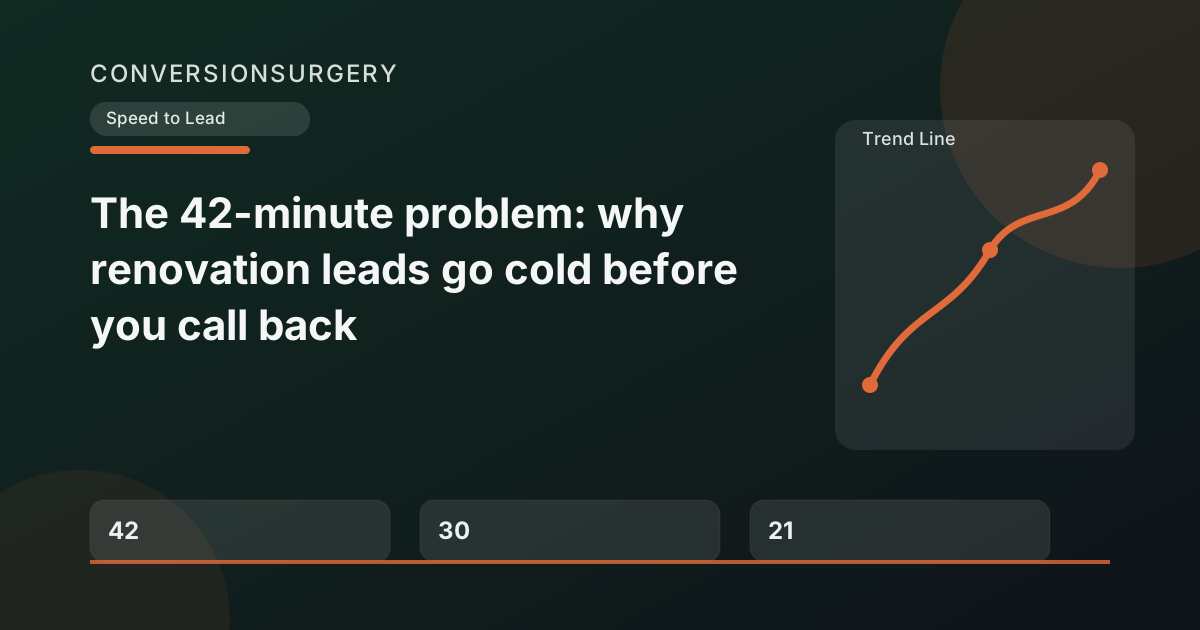
Industry surveys suggest the average contractor takes about 42 minutes to respond to a new lead. If you think that’s fast enough, the data will change your mind. A study out of MIT found that contacting a lead within 5 minutes — versus 30 minutes — makes you 21 times more likely to have a meaningful conversation. Source: MIT Lead Response Management Study, 2007 By the time you’re calling back from the job site, the homeowner has already moved on to the next name on their list.
Key takeaways
- Industry surveys suggest the average contractor lead response time is around 42 minutes — long enough for homeowners to contact and commit to a competitor.
- Responding within 5 minutes makes you 21x more likely to convert a lead than responding at 30 minutes.
- The first contractor to have a real conversation wins 35-50% of jobs in multi-bid situations.
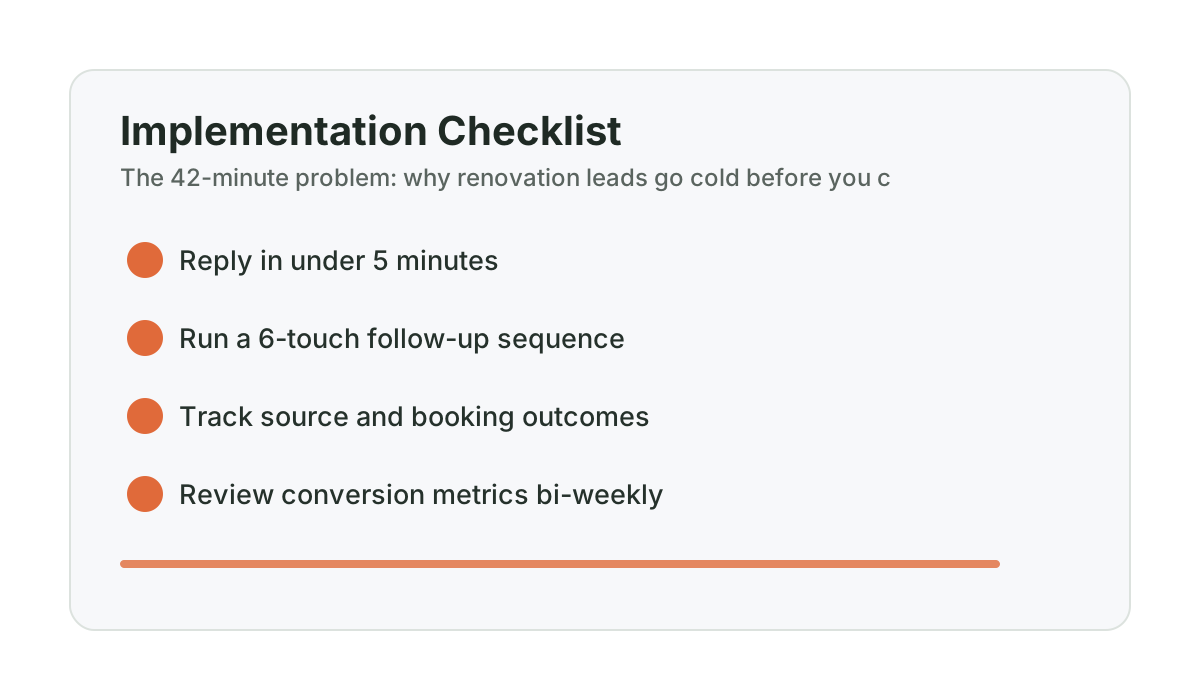
- Three free fixes you can implement today: update your voicemail, set callback alarms, and test your form notifications.
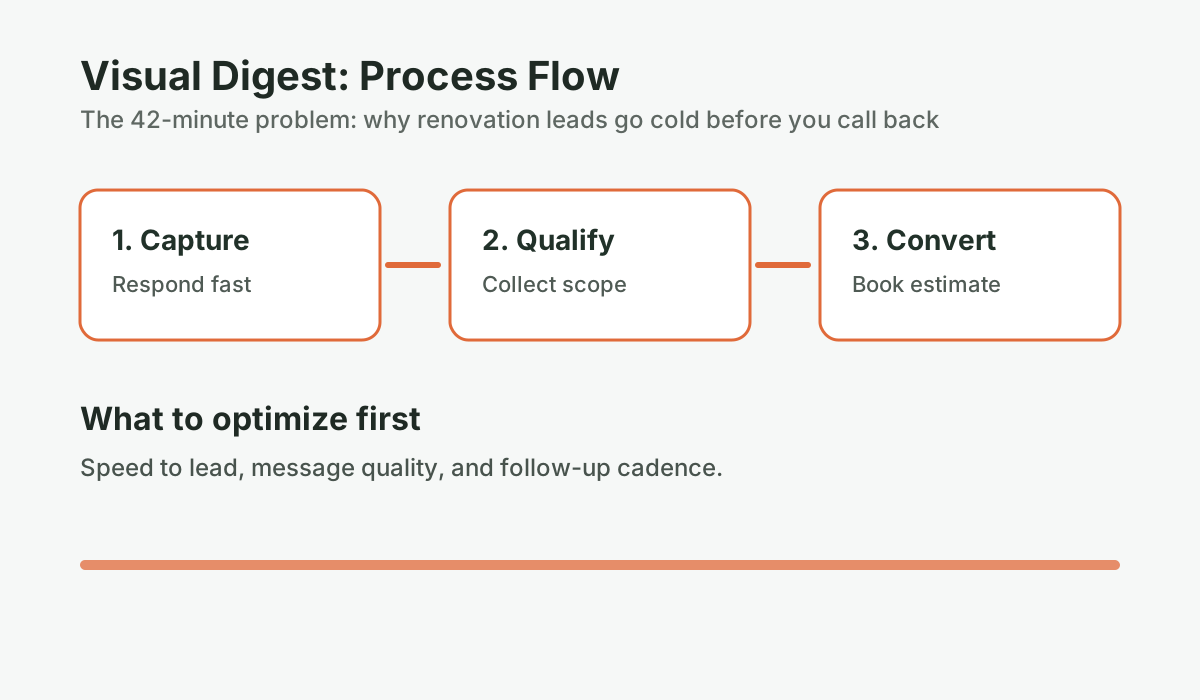
Why do most contractors think they respond fast enough?
When I ask contractors how quickly they respond to new inquiries, the most common answer is some version of “pretty quickly” or “same day.” They believe this because it feels true — they do call back, they do follow up, they’re not ignoring people on purpose.
But “same day” response and “fast enough” response are not the same thing. There’s a gap between how contractors experience their responsiveness and what the data actually shows. The average business takes 42 hours to respond to a web lead, according to Harvard Business Review. Source: Harvard Business Review, “The Short Life of Online Sales Leads,” 2011 Contractors typically respond faster — industry surveys suggest an average around 42 minutes — but even that far exceeds the 5-minute window where leads are most likely to convert.
Forty-two minutes. In that window, here is what a homeowner is doing.
What happens to your leads in the first 42 minutes
The first 42 minutes after a homeowner submits a renovation inquiry is the critical decision window — the period when they are actively comparing contractors, and the first responder gains a decisive advantage.
Homeowners who are actively looking for a contractor aren’t submitting one inquiry and waiting patiently. They’re submitting three to five. Sometimes more. They found your website, filled out your form or called — and then they moved to the next tab, called the next contractor, sent the next message.
Here’s the rough timeline after a homeowner submits a renovation inquiry:
- Minutes 0–2: They’re still on your website, maybe reading reviews. Their attention is on you.
- Minutes 2–10: They’ve moved on. Opened a competitor’s website. Maybe submitted another inquiry.
- Minutes 10–30: If another contractor has already called or texted them, a conversation has started. They’re mentally beginning to commit.
- Minutes 30–60: They’ve spoken to someone else. They may have even booked an estimate call. You’re now a backup, not a frontrunner.
- 60+ minutes: You call. They answer politely, take your details. But the job mentally belongs to whoever called first.
This is not speculation. Invoca’s research found that 27% of calls to contractors go unanswered entirely — and of those who do get voicemail, 85% don’t leave a message and do not call back. Source: Invoca, “The State of the Conversation: Call Intelligence for Home Services,” 2022 The homeowner you think you’re going to call back in an hour has already moved on. If you’re losing leads after hours, an after-hours lead capture system can keep those conversations from disappearing overnight.
How fast are you actually responding to leads?
Take the Speed-to-Lead Leak Scorecard. Five questions, three minutes. See where you stand compared to contractors who close 35%+ of their estimates.
Run the numbers for your business: Take the Speed-to-Lead Scorecard. It takes 2-3 minutes and gives you a clear baseline before your next estimate round.
How does contractor lead response time affect conversion rates?
Contractor lead response time is the elapsed time between a homeowner’s initial inquiry and the contractor’s first meaningful reply — by phone, text, or email. Research shows this single metric is the strongest predictor of whether a lead converts to a booked estimate.
The relationship between response speed and conversion isn’t linear — it’s a cliff. The first few minutes matter disproportionately. Here’s what the research shows:
| Response Time | Likelihood of Qualifying the Lead | Source |
|---|---|---|
| Under 1 minute | Baseline (highest probability) | InsideSales.com / MIT |
| 5 minutes | 21x more likely than 30 minutes | MIT Lead Response Study, 2007 |
| 10 minutes | 4x less likely than 5 minutes | InsideSales.com, 2011 |
| 30 minutes | Drops significantly below 5-minute baseline | MIT Lead Response Study, 2007 |
| 42 minutes (contractor industry average) | Estimated 60–80% lead loss rate | Contractor industry surveys |
| 24 hours | Conversion probability near zero on competitive inquiries | InsideSales.com, 2011 |
The reason the curve drops so sharply isn’t that homeowners are impatient people. It’s that renovation is a considered purchase. They’re comparing contractors. They want to feel confident in whoever they hire. The contractor who responds first has the most time to build that confidence, answer questions, and earn the estimate appointment — before the others have even returned the call.
And the contractor who responds first wins 35–50% of jobs in multi-bid situations. Source: InsideSales.com, “Lead Response Management Study,” 2011 Understanding what each lead is actually worth makes this stat even more urgent — every slow response is real revenue walking out the door.
Why 42 minutes happens — even to contractors who care
This isn’t a character flaw. Renovation contractors are on job sites. They’re measuring walls, talking to crews, managing subcontractors, reviewing material deliveries. Their phone rings, they can’t answer, it goes to voicemail. They tell themselves they’ll call back at lunch. Lunch comes and they’re troubleshooting something. They call back at 3 PM. The homeowner hired someone at 11:30 AM.
The problem isn’t intention. It’s the structural gap between when a lead arrives and when you can physically pick up the phone.
Many contractors respond to evening and weekend inquiries on Monday morning, believing they are being responsive. Those leads have often been cold for 40–60 hours. The homeowner has already filed them away as “no response” before Monday arrives. This is exactly the scenario a weekend inquiry playbook is designed to solve.
What you can do today — without buying anything
Before we talk about automated systems, here are three things you can implement this week with no additional cost:
1. Set a voicemail that sets expectations and prompts a text
Your voicemail message does work. Most contractors use the default carrier greeting or a flat “leave a message.” Change it to something that reduces the homeowner’s uncertainty and keeps them engaged:
“You’ve reached [Name] at [Company]. I’m on a job site and can’t pick up right now. Text me your name and what you’re looking to do — I’ll get back to you within the hour. Or visit [website] to book a time that works for you.”
This does two things: it gives them an action to take instead of waiting, and it signals that you’re professional and responsive — even when you can’t answer.
2. Set a 1-hour callback alarm after every missed call
It sounds simple because it is. When a call comes in you can’t answer, set a reminder for 60 minutes. Don’t rely on memory. Most contractors lose leads not because they don’t care, but because they don’t have a system for remembering.
3. Check your form submission notification settings
If you have a contact form on your website, confirm where those notifications go and how fast they arrive. Many contractors discover that form submissions are going to a general inbox no one monitors, or being filtered to spam. Test it right now. Submit your own form and see what happens.
Why fixing response time matters more than more marketing
A lot of contractors feel the answer to slow revenue is more leads — more ads, more social media, more referral requests. Sometimes that’s right. But if your response time is around 42 minutes, adding more lead volume means you’re paying to lose more leads faster.
Fix the leak before you turn on more water. If you want to see the financial impact, the revenue leak calculator shows exactly how much slow responses are costing your business each month.
This pattern repeats across renovation businesses: contractors run Google Ads, generate real interest, and still lose 60–70% of those leads before they can have a real conversation. The Revenue Recovery System we run monitors inquiries around the clock, responds within seconds during legally permitted messaging hours, and queues restricted-hour inquiries for the next compliant window so leads are handled consistently.
But you don’t need a managed system to start improving. The three steps above will help. So will the related posts in this series: the missed call recovery text playbook and how to build a speed-to-lead SOP when you’re on the job site.
Start by measuring where you actually are. Track your response time for the next seven days. The number will probably surprise you.
Frequently asked questions
What is “speed to lead” for contractors?
Speed to lead is the time between when a potential customer first contacts you — through a phone call, form submission, or text — and when you first respond. For renovation contractors, this metric is one of the strongest predictors of whether you’ll win the job. The faster you respond, the more likely you are to have a conversation before the homeowner has committed to a competitor.
How fast do contractors actually respond to leads?
Industry surveys suggest the average response time across home service industries is approximately 42 minutes for initial contact. Many contractors take several hours or respond the next business day — especially for inquiries that come in on evenings or weekends. By that point, most homeowners have already spoken to a faster-responding contractor.
Does response speed really matter that much if my work is good?
Quality of work matters enormously for referrals, reviews, and repeat business. But for a homeowner who doesn’t know you yet, quality is invisible — they can’t assess it until after they’ve had a conversation and seen your portfolio. Response speed is one of the few signals available to them during the decision window. A contractor who responds in 2 minutes and does solid work will beat a contractor who responds in 2 hours and does excellent work, most of the time.
What should I do when I can’t answer my phone on the job site?
The most effective approach is a combination: a voicemail message that prompts the caller to text you (reducing their wait anxiety), a text-back system that sends a quick acknowledgment, and a personal callback alarm so you don’t forget. If your call volume is high enough that this becomes unmanageable, a managed response system that handles the initial conversation automatically is worth considering. See how to build a speed-to-lead SOP when you’re on the job site for a full framework.
Is the 21x conversion rate improvement from MIT actually applicable to contractors?
The MIT study was conducted across multiple industries including home services, and the directional finding — that faster response correlates dramatically with higher contact and qualification rates — is consistent with what field research in home services shows. The specific multiplier varies by market and trade. What holds universally: the first contractor to have a substantive conversation with a homeowner has a significant advantage over everyone who calls back later, regardless of price or portfolio.
Want help applying this to your pipeline?
Use the matching diagnostic tool first, then book a quick strategy call if you want a done-for-you rollout.

Mashrur Rahman
Founder, ConversionSurgery
I build revenue recovery systems for renovation contractors. After seeing how much money remodelers lose to slow follow-up and missed calls, I built a managed service that handles lead response, estimate follow-up, and after-hours capture automatically. The data in these articles comes from running these systems across real contracting businesses.
Related reading
First-response scripts for Alberta renovation contractors: what to send in the first 60 seconds
A practical 60-second response script library for missed calls, web forms, and inbound SMS in Alberta renovation markets.
Calgary renovation lead response benchmarks (2026): basement, kitchen, and bathroom contractors
Local Calgary benchmarks for response speed, answer rate, and booked estimates so you can see exactly where your pipeline is leaking.
The 7-day speed-to-lead challenge for renovation contractors
Track your actual lead response time for 7 days and you’ll see exactly where you’re losing jobs. Most contractors are surprised by what they find. Here’s the framework.