Missed call recovery: the two-text playbook that saves leads
Updated
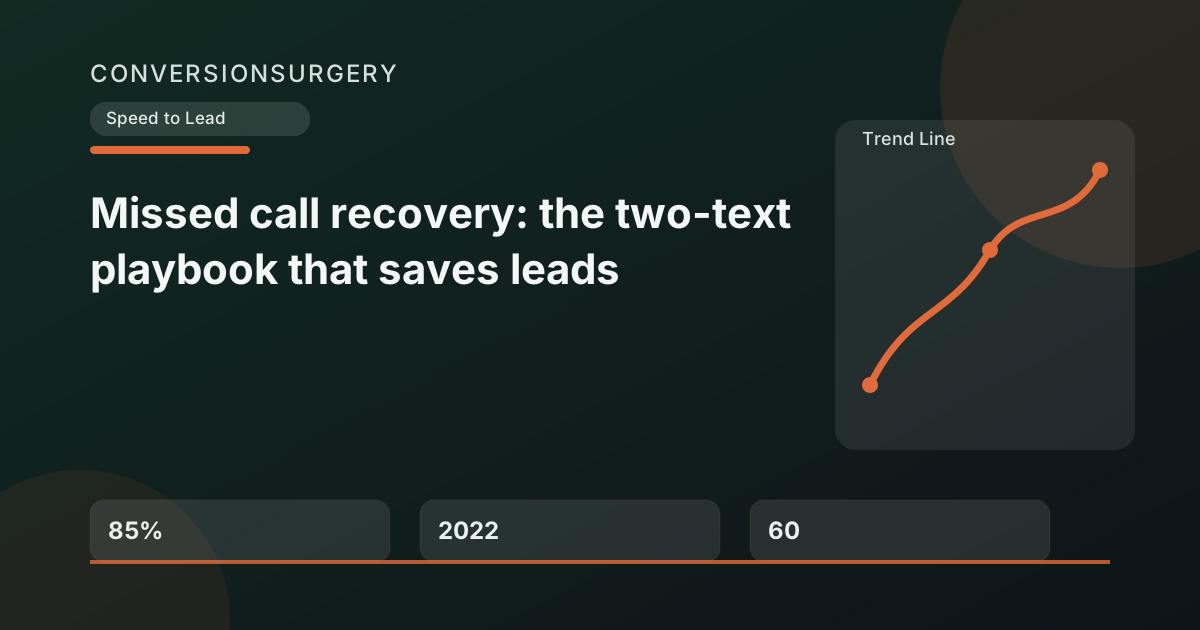
A missed call doesn’t have to mean a lost lead. Most contractors treat an unanswered call as a failure and a callback as the recovery. But 85% of homeowners who reach voicemail don’t leave a message and don’t call back. Source: Invoca, “The State of the Conversation: Call Intelligence for Home Services,” 2022 If your only recovery plan is “call them back when I get a chance,” you’ve already lost most of them. Two texts — sent at the right moments, worded correctly — change that math significantly.
Key takeaways
- 85% of homeowners who hit voicemail do not leave a message and do not call back — a callback-only strategy loses most of them.
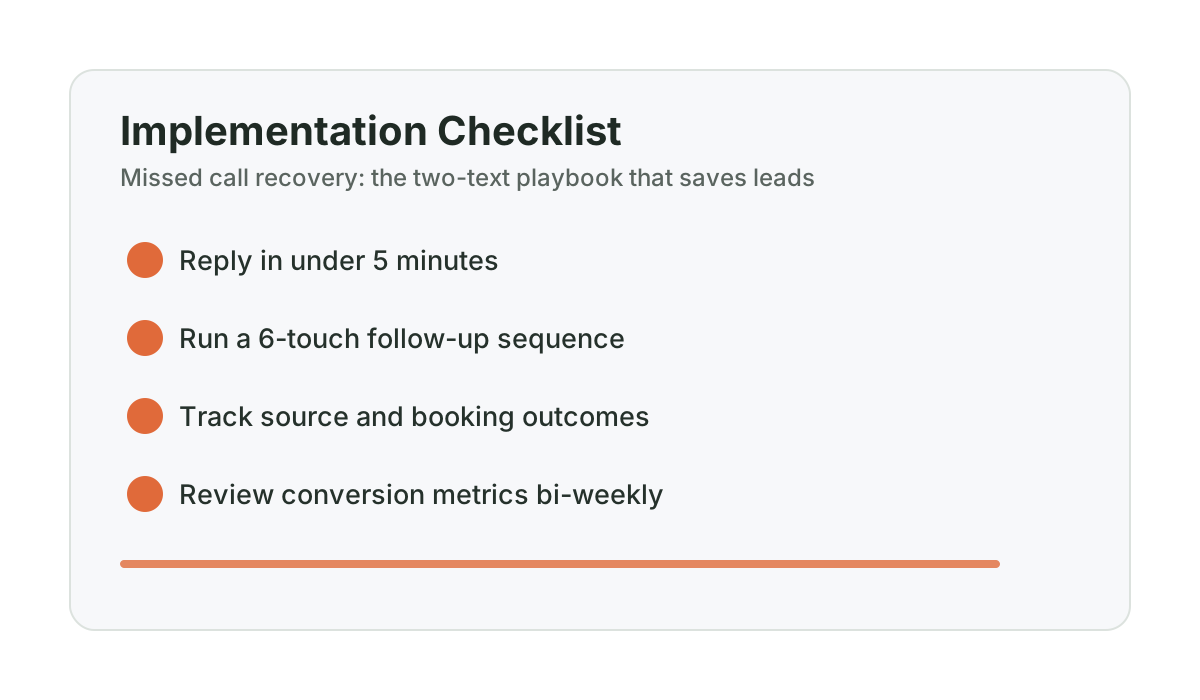
- A missed call text-back sent within 60 seconds achieves 35-50% response rates, compared to under 10% for texts sent after an hour.
- Two texts in sequence — a fast acknowledgment and a 2-hour follow-up — recover the majority of missed-call leads.
- Low-pressure language (“no rush,” “whenever works for you”) outperforms urgent follow-ups by triggering reciprocity instead of avoidance.
Why does a missed call text-back outperform a callback?
A missed call text-back is an SMS sent immediately after an unanswered phone call, acknowledging the caller’s attempt and opening a low-friction text conversation. It outperforms traditional callbacks because it arrives while the homeowner is still in an active search mindset and requires no scheduling coordination.
When a homeowner calls a contractor and gets voicemail, they’re in an active search mindset. They have the problem in front of them — a basement they want finished, a kitchen that needs updating — and they’re trying to solve it. Voicemail introduces delay and uncertainty. They don’t know if you’re busy, unavailable, or simply not interested in small jobs.
A text arrives quickly and requires no coordination. The homeowner doesn’t need to be free to answer a call. They can read it while they’re doing something else. And critically, a text that arrives within 60 seconds of a missed call feels like responsiveness — even though you weren’t there to pick up the phone. That perception matters.
The data supports this. InsideSales research found that text messages as a follow-up channel significantly increase contact rates compared to phone-only outreach, particularly when the lead is cold or time-sensitive. Source: InsideSales.com, “Lead Response Management Study,” 2011
The two-text playbook for recovering missed calls
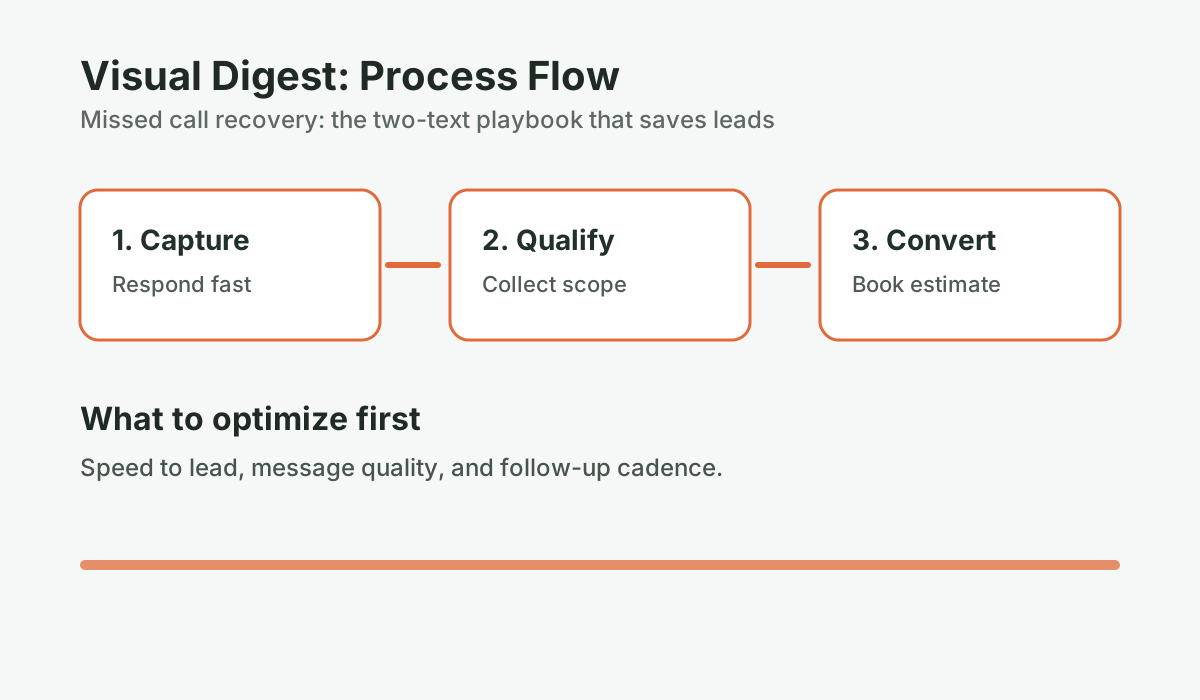
This is a simple, proven sequence. Two messages, two different moments, each doing specific work.
Text 1: Fast acknowledgment (send within 60 seconds of the missed call)
The goal of this text is not to sell anything. It’s to acknowledge that you received the call, reduce the homeowner’s uncertainty about whether you’re a real business that cares about them, and open a low-friction path to continue the conversation.
The message should be short, personal in tone, and end with an open question that invites a reply rather than demanding a callback.
Text 1 — fast acknowledgment:
“Hi, it’s [First Name] from [Company]. Sorry I missed your call — I’m on a job site right now. What can I help you with?”
Notice what this doesn’t do: it doesn’t apologize excessively, ask them to call back at a specific time, or include a promotional message. It also doesn’t start with the company name — it starts with a human name, which reads as personal rather than automated.
The question at the end is deliberate. “What can I help you with?” is lower friction than “Can you describe your project?” or “What are you looking for?” It’s an invitation, not a form.
How fast are you actually responding to leads?
Take the Speed-to-Lead Leak Scorecard. Five questions, three minutes. See where you stand compared to contractors who close 35%+ of their estimates.
Run the numbers for your business: Take the Speed-to-Lead Scorecard. It takes 2-3 minutes and gives you a clear baseline before your next estimate round.
Text 2: Follow-up (send 2 hours later if no response to Text 1)
If Text 1 gets no response within two hours, the homeowner either didn’t see it, saw it and is busy, or is now in conversation with a competitor. Text 2 is a gentle re-engagement that adds context — a light mention of what you do — without pressure.
Text 2 — follow-up:
“Hey [First Name], just wanted to follow up. Still happy to help if you’re looking to get a quote on a renovation. No rush — just reply here whenever works for you.”
This message does something important: it gives them permission to respond on their timeline (“no rush”) which paradoxically increases response rate. High-pressure follow-ups — “I tried to reach you, please call back as soon as possible” — trigger avoidance. Low-pressure follow-ups trigger reciprocity.
The phrase “whenever works for you” also communicates confidence. You’re not desperate for the job — you’re available if they need you. That’s the posture of a busy contractor with a full schedule, which is exactly what a homeowner wants to hire.
How to customize the scripts by trade
The scripts above are intentionally generic so you can adapt them. Here’s how to customize them for the most common renovation trades:
Kitchen remodeling
Text 1: “Hi, it’s [Name] from [Company]. Sorry I missed your call — on a job right now. Reaching out about a kitchen?”
Text 2: “Just following up — happy to get you a quote on a kitchen renovation whenever you’re ready. Reply here or I can give you a call this evening.”
Basement renovation
Text 1: “Hi, it’s [Name] from [Company]. Sorry I missed you — I’m on a job site. Are you looking to finish a basement?”
Text 2: “Hey, just checking back in. If you’re still looking to get a basement quote, I’m happy to help — just reply here.”
General renovation inquiry (unknown project type)
Text 1: “Hi, it’s [Name] from [Company]. Missed your call — I’m on site. What are you looking to do?”
Text 2: “Following up in case you still need a quote. Happy to chat whenever — just reply here and I’ll get back to you.”
What does the data say about text-back timing?
| First Text Timing | Estimated Response Rate | Notes |
|---|---|---|
| Under 60 seconds during legally permitted messaging hours | Highest (35–50% range) | Still in active search mindset |
| 1–5 minutes | Strong (25–35% range) | Good recovery window |
| 5–30 minutes | Moderate (15–25% range) | May have moved on to another contractor |
| 30–60 minutes | Low (10–15% range) | Likely in conversation with someone else |
| 60+ minutes | Very low (under 10%) | Decision window likely closed |
Source: Response rate estimates derived from InsideSales.com Lead Response Management Study, 2011, and MIT Lead Response Management Study, 2007 — adapted for SMS channel in home services context.
The implication is clear: if you’re going to send a recovery text at all, the value degrades quickly with every passing minute. A text sent in 5 minutes is worth several times more than one sent in an hour.
How to send these texts without adding more to your plate
The obvious problem: if you’re on a job site and missed a call, you’re also too busy to be sending texts within 60 seconds.
There are a few practical approaches, ordered by level of automation:
Option 1: Manual but systematic
Set a phone notification that alerts you to missed calls. When a job site task is done and you have 30 seconds — walking to the truck, waiting for a measurement — check missed calls and fire off the Text 1 script. This requires discipline and won’t catch everything, but it’s free and starts tomorrow.
Option 2: Dedicated person
If you have an office person, spouse, or admin who handles the phone part-time, give them this playbook. When they see a missed call come in, they send Text 1 within 5 minutes. This works at moderate lead volumes but breaks down evenings and weekends when they’re not available.
Option 3: Automated missed call text-back
A system that detects a missed call and sends Text 1 automatically within seconds during legally permitted messaging hours (with restricted-hour inquiries queued for the next compliant window), then monitors for replies and either routes them to you or continues the conversation. This is what the ConversionSurgery Revenue Recovery System does: it monitors inquiries around the clock, responds within seconds during legally permitted messaging hours, and queues restricted-hour inquiries for the next compliant window. In modeled contractor scenarios, that consistency recovers meaningful lead volume that manual callback workflows often miss.
The right approach depends on your lead volume and operating structure. For under 10 leads a month, manual is fine. For 15–30+ leads a month, automation is worth considering — not because manual is wrong, but because the execution consistency of a system beats the best intentions of a busy person every time. If you’re weighing whether to add a tool or hire help for this, the managed service vs. hiring cost comparison breaks down the economics.
What to do when Text 2 gets no response
If two texts get no response, that lead isn’t gone — it’s cold. Add them to a longer follow-up sequence: a check-in in one week (“Still looking to get that kitchen project going? Happy to get you a quote.”), and another at three weeks if needed. Renovation decisions can take time. Some contractors report that high-value jobs come from leads that first contacted them six weeks earlier. This is exactly where a structured follow-up cadence keeps the conversation alive without feeling pushy.
For a full approach to building this follow-up process, read how to build a speed-to-lead SOP when you’re on the job site. And to track whether this is actually working, see the one KPI that predicts booked estimates.
Frequently asked questions
What is the best text message to send after a missed call from a lead?
The most effective first text after a missed call is short, personal in tone, includes your name and company, acknowledges that you missed the call without over-apologizing, and ends with an open question. For example: “Hi, it’s [Name] from [Company]. Sorry I missed your call — I’m on a job right now. What can I help you with?” The question invites a reply rather than directing them to call back, which reduces friction for the homeowner.
How long should I wait before sending a follow-up text if they don’t respond?
Two hours is the standard recommendation for the second text. This is long enough that the homeowner has had time to respond if they wanted to, but short enough that the lead is still warm. A follow-up sent the next day risks feeling irrelevant if the homeowner has already committed to a competitor. After the two-text sequence, a longer-interval follow-up at one week is appropriate before moving the lead to a nurture sequence.
Is it legal to text back a missed call in Canada without prior consent?
Under CASL (Canada’s Anti-Spam Legislation), sending a commercial electronic message — including SMS — generally requires prior express or implied consent. A missed inbound call from a homeowner who called your business number can establish implied consent for a single follow-up message. However, the rules are nuanced, and any ongoing marketing sequence requires explicit consent. If you’re setting up automated text-back, work with a system that tracks consent and honors opt-outs quickly. Every message in a compliant system should offer a way to opt out.
What if the homeowner replies but I’m still on the job site?
That’s the right problem to have. If you get a reply, the conversation is open. You have time to respond at a natural break in your work — within 15–30 minutes is fine once the initial contact has been made. The urgency is highest in the first 5 minutes before any contact. Once a homeowner has replied to your text, they’re engaged and waiting for you specifically. That’s a fundamentally different situation than a cold lead who hasn’t heard from anyone.
Should I use my personal cell phone for these texts?
If you’re sending them manually and starting out, yes — it’s better than nothing. But as your lead volume grows, using a dedicated business number is worth setting up. A dedicated number keeps personal and business communications separate, allows you to route messages to different team members, and creates a cleaner record of conversations. It also means a team member or system can handle initial contact without access to your personal phone.
Want help applying this to your pipeline?
Use the matching diagnostic tool first, then book a quick strategy call if you want a done-for-you rollout.

Mashrur Rahman
Founder, ConversionSurgery
I build revenue recovery systems for renovation contractors. After seeing how much money remodelers lose to slow follow-up and missed calls, I built a managed service that handles lead response, estimate follow-up, and after-hours capture automatically. The data in these articles comes from running these systems across real contracting businesses.
Related reading
First-response scripts for Alberta renovation contractors: what to send in the first 60 seconds
A practical 60-second response script library for missed calls, web forms, and inbound SMS in Alberta renovation markets.
Calgary renovation lead response benchmarks (2026): basement, kitchen, and bathroom contractors
Local Calgary benchmarks for response speed, answer rate, and booked estimates so you can see exactly where your pipeline is leaking.
The 7-day speed-to-lead challenge for renovation contractors
Track your actual lead response time for 7 days and you’ll see exactly where you’re losing jobs. Most contractors are surprised by what they find. Here’s the framework.