The follow-up engine: a simple cadence that revives ‘maybe later’ estimates
Updated
A “maybe later” estimate is not a lost estimate. It’s a deferred decision — and deferred decisions have a close rate that’s dramatically higher than zero, provided you have a system to stay in front of them without being annoying. Most contractors don’t have that system. They follow up once or twice, hear nothing, and write the lead off. The result is a close rate stuck at 20-25% when it could be 30-40% with a consistent six-touch follow-up cadence applied to every estimate. Here’s exactly how to build that cadence — what to send, when to send it, and why each touch works.
Key takeaways
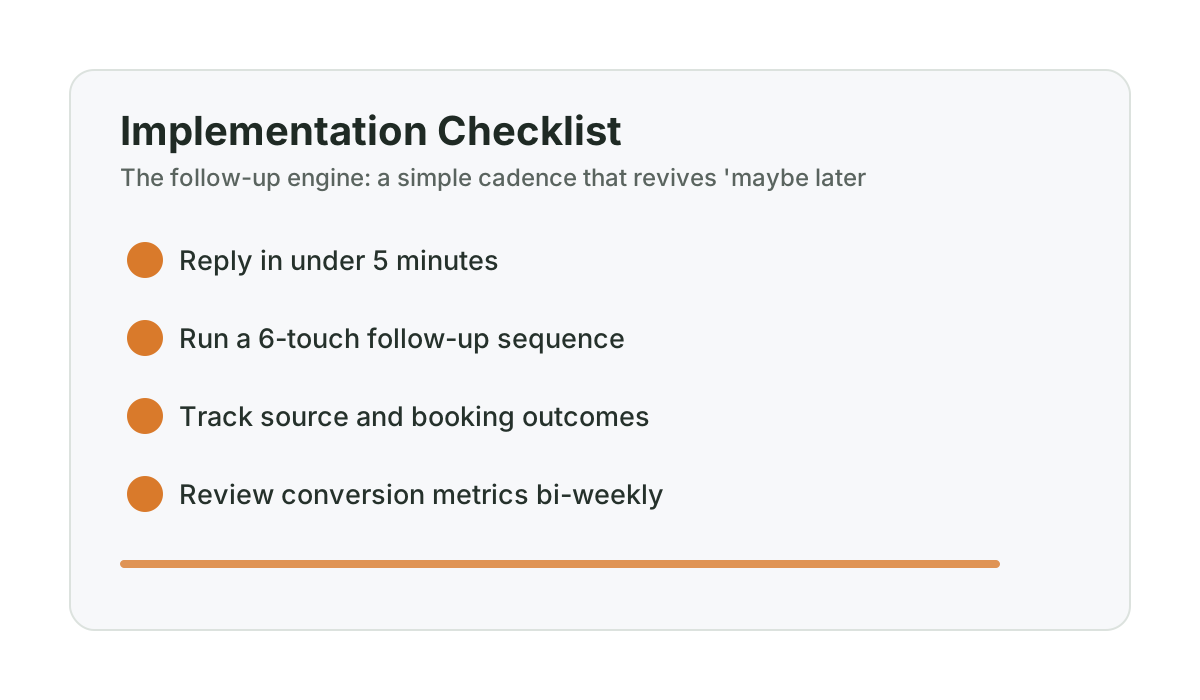
- Build a six-touch estimate follow-up cadence at Day 1, 3, 7, 14, 21, and 42 — each message with a specific purpose, not just “checking in.”
- Effective follow-up touches are under 60 words, include a value hook, and end with a low-friction ask.
- Most renovation sales close between touch 5 and 12, but most contractors quit after touch 2 — the cadence fills that gap.
- Automate the cadence so it runs regardless of how busy you are on the job site.
- A consistent cadence typically moves close rates from 20-25% to 30-40% without any additional marketing spend.
Why “I’ll follow up when I get a chance” is not a system
Mental notes don’t close jobs. The problem with ad-hoc follow-up is not just that it’s inconsistent — it’s that the moments when follow-up would be most valuable are precisely the moments when you’re least likely to do it. You’re on a job site, a crew member has a question, a supply delivery is wrong, and “text the Hendersons about their kitchen estimate” is the last thing on your mind.
According to Source: National Association of Home Builders, “Remodeling Industry Report,” 2023, renovation homeowners take an average of 3-6 weeks from first contact to signed contract. That’s three to six weeks during which your estimate is sitting in an inbox, competing with the demands of daily life. If you disappear during those weeks, the homeowner fills the void with the contractor who didn’t disappear.
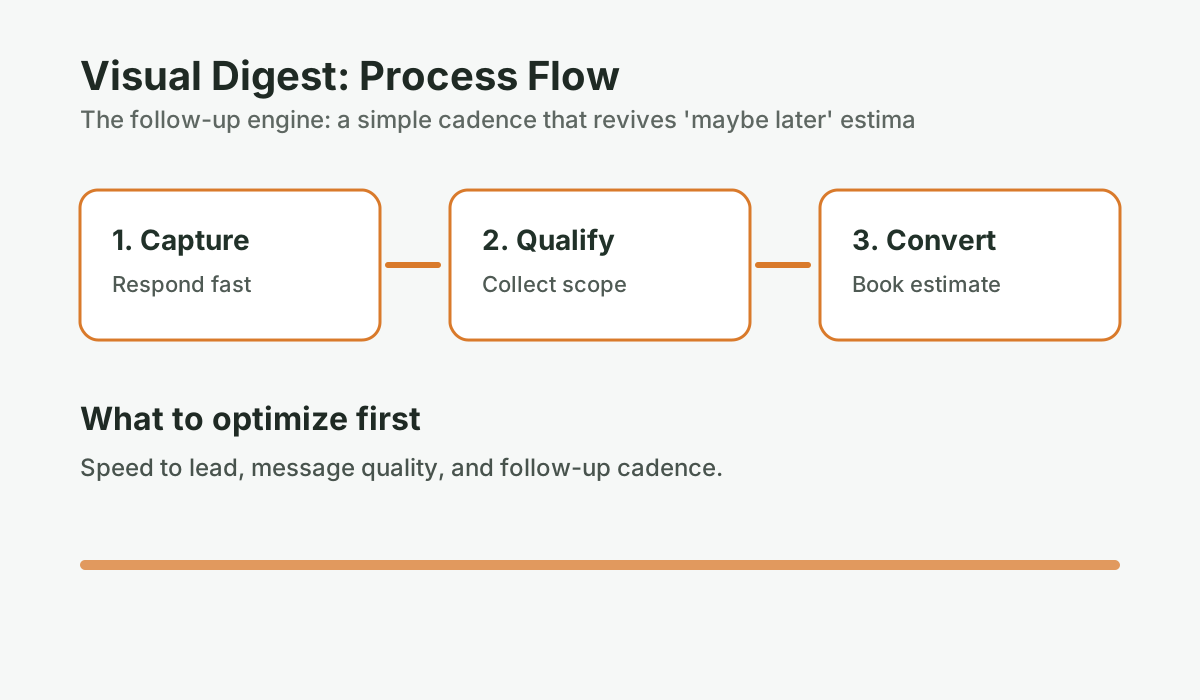
The solution is removing the mental overhead entirely. A follow-up engine is a defined sequence with predetermined messages at predetermined intervals — something you build once and apply to every estimate you send.
What makes a follow-up touch effective vs. ignored?
An effective follow-up touch is a brief, purposeful message that gives the homeowner something useful — a relevant detail, a clarifying question, or a concrete next step — rather than simply asking for a decision.
Before laying out the cadence, it’s worth understanding what makes a follow-up touch effective versus one that gets ignored or triggers mild irritation.
Effective follow-up touches have three characteristics:
- A clear, brief message. Under 60 words, ideally under 40. Long messages signal that you need something from them. Short messages signal that you’re just being helpful.
- A value hook or relevant detail. Something that makes the message worth reading — a useful piece of information, a question that helps them clarify their thinking, or a concrete next step they hadn’t considered.
- A clear, low-friction ask. Not “ready to move forward?” — that’s high pressure. Something like “happy to answer any questions” or “let me know if anything’s changed” — options that are easy to respond to.
The goal of most follow-up touches is not to close the job on that message. It’s to maintain presence and provide a natural opening for the homeowner to re-engage when they’re ready. The close usually happens because you were there when they decided, not because a specific message pushed them over the edge.
What happens to your estimates after you send them?
Score your estimate follow-up process. Most contractors stop after one touch. This scorecard shows where your close rate is leaking.
Run the numbers for your business: Score your estimate follow-up. It takes 2-3 minutes and gives you a clear baseline before your next estimate round.
The 6-touch estimate follow-up cadence: Day 1 through Day 42
An estimate follow-up cadence is a pre-built sequence of timed messages — typically six touches over six weeks — that automatically keeps you in front of homeowners who received your quote but haven’t yet signed.
Below is a practical sequence for renovation contractors. Each touch has a purpose, a channel, and example language. Adapt the specific wording to match how you naturally communicate — the framework matters more than the exact words.
| Day | Channel | Purpose | Example Message |
|---|---|---|---|
| Day 1 (same day as estimate) | Text | Confirm delivery, open conversation | “Hi [Name], just sent over the estimate for your [project type]. Let me know if you have any questions — happy to walk through any of it.” |
| Day 3 | Text | Add value, start conversation | “One thing I should have mentioned — [relevant detail about their project, a material option, or a useful question about scope]. Totally optional, just something to consider.” |
| Day 7 | Text or call | Create soft urgency with real information | “I have a project completing around [date] and a slot opening up after. If your timing lines up, I’d want to give you first look at it before I commit it elsewhere.” |
| Day 14 | Address a common hesitation, provide social proof | “A question I get a lot from homeowners doing [project type]: [common concern, e.g., ‘how disruptive is the process?’]. Here’s how I handle it: [brief answer]. Happy to talk through your specific situation.” | |
| Day 21 | Text | Direct check-in, open door | “Hi [Name], just circling back on the [project] estimate. Are you still working through the decision, or has something changed on your end? No pressure either way — I just want to make sure I have your project in mind for scheduling.” |
| Day 42 | Text or email | Final message, leave door open | “I’m going to go ahead and close out your file for now since I haven’t heard back. If the timing ever works out, I’d genuinely love to help with this project. Best of luck with whatever direction you go.” |
Source: Cadence structure adapted from Brevet Group follow-up research, 2022; messaging frameworks based on home services sales best practices
Day 1: The confirmation text
The most common follow-up mistake is waiting days before the first check-in. By then, the homeowner’s mental state has shifted — your estimate is now “that quote I need to look at” rather than something fresh and relevant.
Send a text the same day the estimate goes out. Keep it to two sentences. The purpose is to confirm they received it and to signal that you’re available for questions. You’re not asking for a decision — you’re making it easy for them to engage if they want to. The speed of that first touch matters — just like speed-to-lead predicts whether inquiries convert to booked estimates, your Day 1 response sets the tone for the entire follow-up sequence.
What not to do: Don’t ask them to review it and call you back. Don’t list everything that’s in the estimate. Don’t use the phrase “please let me know if you have any questions” — it’s passive and forgettable. Instead, make it specific: “happy to walk through the materials section if that part was confusing” is more likely to get a response than a generic courtesy line.
Day 3: The value-add text
By Day 3, a homeowner who’s seriously considering your estimate has almost certainly read it at least once and has some reaction to it — whether that’s enthusiasm, questions, or sticker shock. The Day 3 touch is designed to give them a reason to re-open that estimate and think about it again.
The best Day 3 message references something specific to their project. A few approaches that work:
- A relevant material or design option: “I forgot to mention — there’s a cabinet line that fits your style but runs about $1,200 less than what I quoted. Happy to swap it in if you want to see the options.”
- A question that helps them think through scope: “Quick question on your basement — are you planning to include a bathroom in this phase, or would you want that rough-plumbed now for later? It affects the estimate a bit and might be worth thinking through.”
- A relevant project photo: Send a before/after of a similar job with a single line: “Here’s a kitchen we finished last month — similar footprint to yours.”
The key is that the message gives them something. It’s not asking for anything — it’s adding to the conversation.
Day 7: The scheduling window
By Day 7, homeowners who have not responded are usually in one of two states: they’re still comparing options, or they’ve gotten busy and the decision is temporarily on hold. The Day 7 message addresses both.
Mentioning an upcoming project slot creates soft, legitimate urgency. You’re not manufacturing a fake deadline — you genuinely do have a schedule to manage. If you have a project completing in the next few weeks and you want to fill the slot, saying so is both honest and effective.
The message gives the homeowner a concrete reason to make a decision: if they want that slot, they need to move. If they don’t, they can still engage at their own pace. Either way, you’ve given them a reason to respond.
This is also a good touch to make as a call rather than a text. If they pick up, you have a genuine conversation opportunity. If they don’t, follow up with a voicemail and then a text version of the same message.
Day 14: The concern-addressing email
Two weeks is the inflection point. Homeowners who reach Day 14 without responding are not necessarily uninterested — they’re often stuck on a concern they haven’t voiced. The Day 14 email is designed to surface and address those unspoken hesitations.
The most common hesitations for renovation projects:
- Disruption — what does daily life look like while work is happening?
- Timeline — will this really be done by the date quoted?
- Scope creep — what if costs go over?
- Decision timing — is now actually the right time to start?
Pick one concern that’s relevant to their specific project type and address it directly. A basement homeowner worries about disruption and smell. A kitchen homeowner worries about living without a functional kitchen for weeks. A bathroom homeowner worries about having only one functional bathroom during renovation. Name the concern, explain your approach, and invite a conversation.
Day 21: The direct check-in
At three weeks, it’s time to ask a direct question. Not “are you ready to sign?” — that’s pressure. But asking directly whether something has changed or whether they’re still working through the decision is completely appropriate and often triggers a response.
Homeowners who’ve been sitting on an estimate for three weeks often feel vaguely guilty about not getting back to you. A message that makes it easy to respond — that acknowledges “no pressure” and offers a genuine out — often gets a response that days of silence didn’t produce.
Some homeowners at this stage will tell you they went with someone else. That’s information worth having — it closes the loop and frees your attention. Some will tell you they’ve been meaning to reply and are still interested. And some will tell you they need another month, which gives you something concrete to follow up on.
Day 42: The close-out message
Six weeks is a reasonable window for a renovation decision. The Day 42 message does something counterintuitive: it signals that you’re stepping back. This works for two reasons.
First, it respects the homeowner’s time and autonomy. You’re not going to keep messaging someone indefinitely. That boundary is professional and actually increases trust.
Second, it sometimes triggers a response from homeowners who had the project on their mental list but hadn’t made a decision. “I’m going to close out your file” creates a genuine deadline — the contractor is moving on — and that can be the nudge they needed.
Day 42 messages can still recover jobs in a minority of cases, which is why that final touch is worth sending. A $50,000 job that comes in because of a two-sentence final message is revenue you would have left entirely on the table.
How to run this system without it consuming your schedule
The six-touch cadence above is about 200 words of total communication spread over six weeks. The time investment, if you’re doing it manually, is maybe 15 minutes per estimate across the full sequence.
The problem isn’t the time per estimate — it’s managing the cadence across 10, 20, or 50 active estimates simultaneously. When you’re tracking that in your head or in a spreadsheet, it falls apart. The solution is either a CRM with automated follow-up sequences, or a managed system that runs the sequences for you. If you’re also losing leads that come in after business hours, those gaps compound — an unanswered evening inquiry that also gets no estimate follow-up is two missed chances on the same lead.
The ConversionSurgery Revenue Recovery System runs this exact cadence automatically — every estimate you mark as sent triggers the sequence, and the AI handles the messages in your voice, around the clock. No spreadsheet, no mental calendar, no “I meant to follow up on that.” Contractors who fix these operational gaps typically see significant revenue improvements over six to twelve months, largely through consistent automated follow-up on estimates that would have otherwise gone cold.
For the specific text scripts you can use at each touch, see Estimate follow-up scripts that don’t sound salesy. And if you want to understand the financial impact of improving your close rate, read Why “we sent the quote” is where renovation sales go to die. You can also see how one recovered project pays for the entire system.
Frequently asked questions
What is the best way to follow up on a contractor estimate?
The most effective approach is a structured cadence of six touches over six weeks, with each message serving a specific purpose: confirming delivery, adding value, creating soft urgency, addressing hesitations, asking a direct question, and closing the loop. The key distinction from generic follow-up is that each message gives the homeowner something — a useful detail, a relevant question, or helpful information — rather than simply asking where they are on a decision.
How long should I wait before following up on a sent estimate?
The first follow-up should happen the same day the estimate is sent — ideally within a few hours. This is a brief confirmation text, not a sales call. Subsequent touches should follow a structured cadence: Day 3, Day 7, Day 14, Day 21, and Day 42. The first week is critical — homeowners who don’t hear from you in the first few days are more likely to have already moved on or become disengaged.
When should I stop following up on an estimate?
Six weeks and six touches is a practical and respectful limit. After that, move the estimate to a long-cycle “win-back” list and send a low-touch message every 30-60 days for another few months. Some renovation decisions take longer than six weeks — homeowners dealing with financing, permits, or personal circumstances may circle back months later. A brief monthly check-in costs almost nothing and occasionally recovers jobs that otherwise would have been written off.
Should I call or text when following up on estimates?
Text for most touches — homeowners are more likely to read and respond to a text than pick up an unexpected call. Reserve calls for Day 7 (the scheduling window conversation) and Day 21 (the direct check-in). If you do call and get no answer, follow up with a text version of the same message. Email works well for the Day 14 touch, which is typically longer and benefits from being in writing so homeowners can read it at their own pace.
How much can a consistent follow-up cadence improve my close rate?
Based on industry data, a consistent six-touch follow-up cadence typically improves close rates from the 20-25% range to the 30-40% range. For a contractor sending 20 estimates per month at $45,000 average project value, that improvement translates to roughly $90,000 in additional monthly revenue. Contractors implementing structured follow-up report meaningfully higher close rates, generating significant additional revenue without any change to lead generation.
Want help applying this to your pipeline?
Use the matching diagnostic tool first, then book a quick strategy call if you want a done-for-you rollout.

Mashrur Rahman
Founder, ConversionSurgery
I build revenue recovery systems for renovation contractors. After seeing how much money remodelers lose to slow follow-up and missed calls, I built a managed service that handles lead response, estimate follow-up, and after-hours capture automatically. The data in these articles comes from running these systems across real contracting businesses.
Related reading
Dormant lead reactivation playbook for slow season (Alberta renovation edition)
Turn quiet months into booked pipeline by reactivating old estimates with a structured, non-pushy cadence.
Track follow-up like a pipeline (and stop losing quotes you already paid for)
A contractor sales pipeline has 5 stages, clear move/close rules, and 3 metrics that matter. Here’s how to stop estimates from disappearing.
No-show to sold: the reminder and reschedule system for in-home estimates
Contractor estimate no-shows waste 2-4 hours per occurrence. A 3-part reminder sequence — 48hr, 24hr, 2hr — cuts no-shows dramatically. Here’s the system.