The one speed-to-lead KPI that predicts booked estimates
Updated
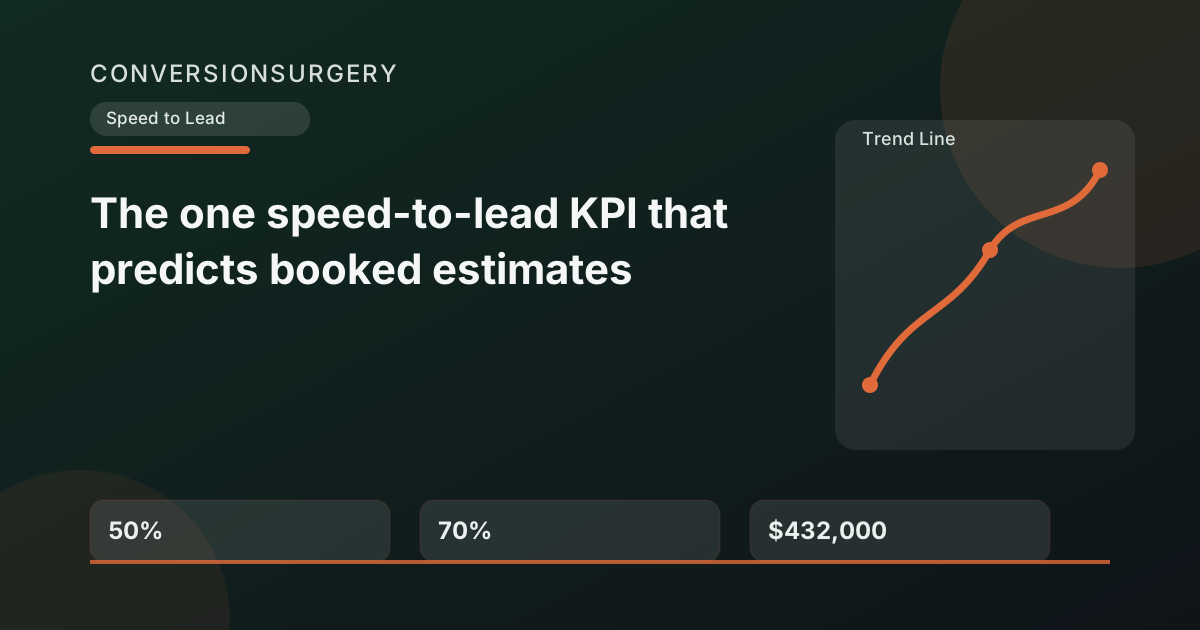
If you want to know whether your sales process is working, there is one metric that tells you more than any other: your contact-to-appointment conversion rate. This is the percentage of leads you actually reach — by phone, text, or in person — that convert into a booked estimate. Most contractors track how many leads they receive. Almost none track this number. That’s why close rates stay stuck and revenue stays unpredictable, no matter how much is spent on marketing.
Key takeaways
- The speed-to-lead KPI that matters most is your contact-to-appointment conversion rate — the percentage of leads you actually reach that book an estimate.
- Improving your contact rate from 50% to 70% can add $432,000 in annual revenue with zero additional marketing spend.
- A contact rate below 50% usually means response time is the problem; a contact-to-appointment rate below 40% means conversation quality is the problem.
- Response speed and multi-attempt follow-up are the two biggest levers for improving contact rate.
Why lead count is a misleading metric for contractors
Lead count is the total number of inquiries a contractor receives in a given period. While commonly tracked, it reveals nothing about whether those inquiries convert to conversations, estimates, or revenue — making it a vanity metric that masks deeper pipeline problems.
Leads are a vanity metric for contractors. Getting 40 inquiries a month sounds healthy. But if you’re only reaching 18 of those people, and only 6 of those conversations convert into estimate appointments, and you close 2 of those estimates — you have a 5% lead-to-job rate. You’re not getting more jobs by generating more leads at that conversion ratio. You’re paying more to lose at the same rate.
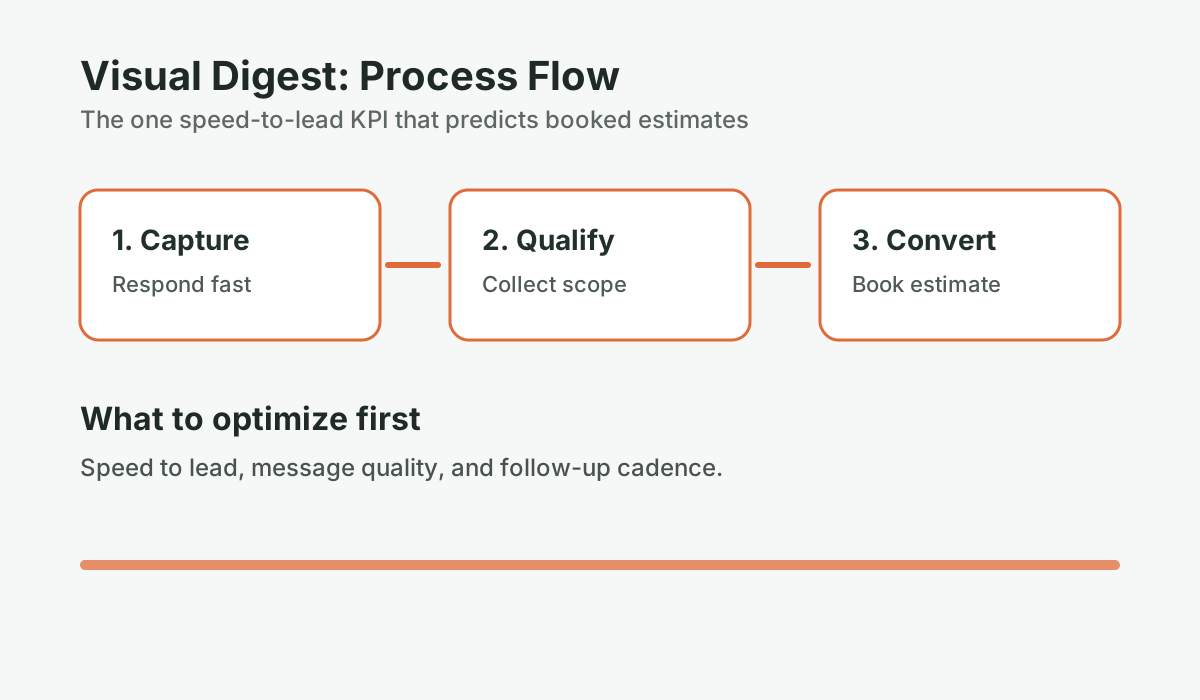
The contractor sales funnel has three distinct stages where revenue leaks:
- Lead to contact: Did you actually reach this person? Or did they go to voicemail, do not hear back, and move on?
- Contact to appointment: Of the people you did reach, how many agreed to an estimate visit?
- Appointment to close: Of those estimate visits, how many turned into signed jobs?
Most contractors only think about the third stage because that’s where the revenue is most visible. But the biggest losses happen at stage one — the contact rate — and stage two — the conversion to appointment. And response speed is the primary driver of both.
How to calculate your speed-to-lead KPI: contact-to-appointment rate
You need three numbers from the past 30–90 days:
- Total leads received — every call, form, text, referral call that came in
- Total contacts made — every lead where you actually had a real conversation (not voicemail left, not text sent with no reply)
- Total estimate appointments booked — real appointments with a date and time set
Then calculate two ratios:
Contact rate = Contacts made ÷ Total leads received
Contact-to-appointment rate = Estimate appointments ÷ Contacts made
If you don’t have clean records — and most contractors don’t — start with a rough estimate based on memory, then begin tracking from today. Even a rough baseline is more useful than no baseline. A simple follow-up pipeline tracker can help you collect this data consistently.
How fast are you actually responding to leads?
Take the Speed-to-Lead Leak Scorecard. Five questions, three minutes. See where you stand compared to contractors who close 35%+ of their estimates.
Run the numbers for your business: Take the Speed-to-Lead Scorecard. It takes 2-3 minutes and gives you a clear baseline before your next estimate round.
What do strong contact-to-appointment benchmarks look like by trade?
Here are benchmarks based on industry data from ServiceTitan, InsideSales, and field research across home service businesses. These reflect realistic performance, not theoretical maximums.
| Trade | Average Contact Rate | Strong Contact Rate | Average Contact-to-Appt | Strong Contact-to-Appt |
|---|---|---|---|---|
| Kitchen remodeling | 45–55% | 75%+ | 40–55% | 65%+ |
| Basement renovation | 40–55% | 70%+ | 45–60% | 70%+ |
| Bathroom remodeling | 50–60% | 75%+ | 40–55% | 65%+ |
| Whole-home renovation | 35–50% | 65%+ | 50–65% | 75%+ |
| General contracting (reno) | 40–55% | 70%+ | 40–55% | 65%+ |
Source: ServiceTitan Benchmark Report 2023; InsideSales.com Lead Response Management Study, 2011 — adapted for renovation contractor context.
A note on interpreting these: a contact rate below 50% typically means response time is the problem. A contact-to-appointment rate below 40% typically means the conversation quality is the problem — what you say and how you say it once you’re on the phone. These are different problems with different fixes. Most contractors conflate them. For a deeper look at how these numbers compare to industry standards, see the contractor benchmarks breakdown.
Why does response speed drive the contact rate?
Contact rate is the percentage of total leads a contractor actually reaches for a live conversation. It is the single biggest factor determining how many estimate appointments get booked, and it is driven primarily by how quickly and persistently a contractor follows up.
Your contact rate is almost entirely a function of two variables: how fast you respond and whether you try more than once. Research from InsideSales found that making 6 contact attempts more than doubles your contact rate compared to making just one attempt. Source: InsideSales.com, “Lead Response Management Study,” 2011 Most contractors make one or two attempts and move on.
But speed matters even more than persistence. The MIT Lead Response Study found that leads contacted within 5 minutes are 21 times more likely to be reached than leads contacted at 30 minutes. Source: MIT Lead Response Management Study, 2007 If your contact rate is stuck at 40–50%, the first variable to investigate is how fast you’re making that first contact attempt — not what you’re saying when you get there.
How much revenue does a low contact rate actually cost?
Let’s put this in revenue terms, because that’s what matters.
Assume you receive 30 renovation inquiries per month. Your average job value is $40,000. Your current contact rate is 50%, contact-to-appointment rate is 50%, and close rate is 30%.
That math gives you: 30 leads → 15 contacts → 7.5 appointments → 2.25 closed jobs → $90,000/month in revenue.
Now assume you improve your contact rate from 50% to 70% through faster response and better follow-up. Everything else stays the same.
30 leads → 21 contacts → 10.5 appointments → 3.15 closed jobs → $126,000/month in revenue.
That’s $36,000 additional monthly revenue — $432,000 per year — from fixing one metric. No additional marketing spend. No price increase. No hiring. Just reaching more of the leads you already have. The revenue leak calculator can help you run this math with your own numbers.
This is the math that surprises most contractors when they see it for the first time. They’ve been focused on the wrong number.
What actually moves the contact rate
Based on published benchmarks and operating patterns across renovation businesses, here are the levers that improve contact rate most reliably:
Response time under 5 minutes
This alone can move contact rate dramatically. Whether this is you personally calling back faster, a team member handling initial contact, or an automated response that buys time until you can call — speed is the primary variable. See the 42-minute problem post for the full data on why this window matters so much.
Multi-channel first contact
If a lead comes in by phone and you miss it, don’t only try to call back. Send a text at the same time. Many homeowners are in meetings, running errands, or simply prefer text. A text that says “Sorry I missed your call — happy to answer any questions. What are you looking to do?” gets a response rate far higher than a voicemail alone.
Multiple attempts on the same lead
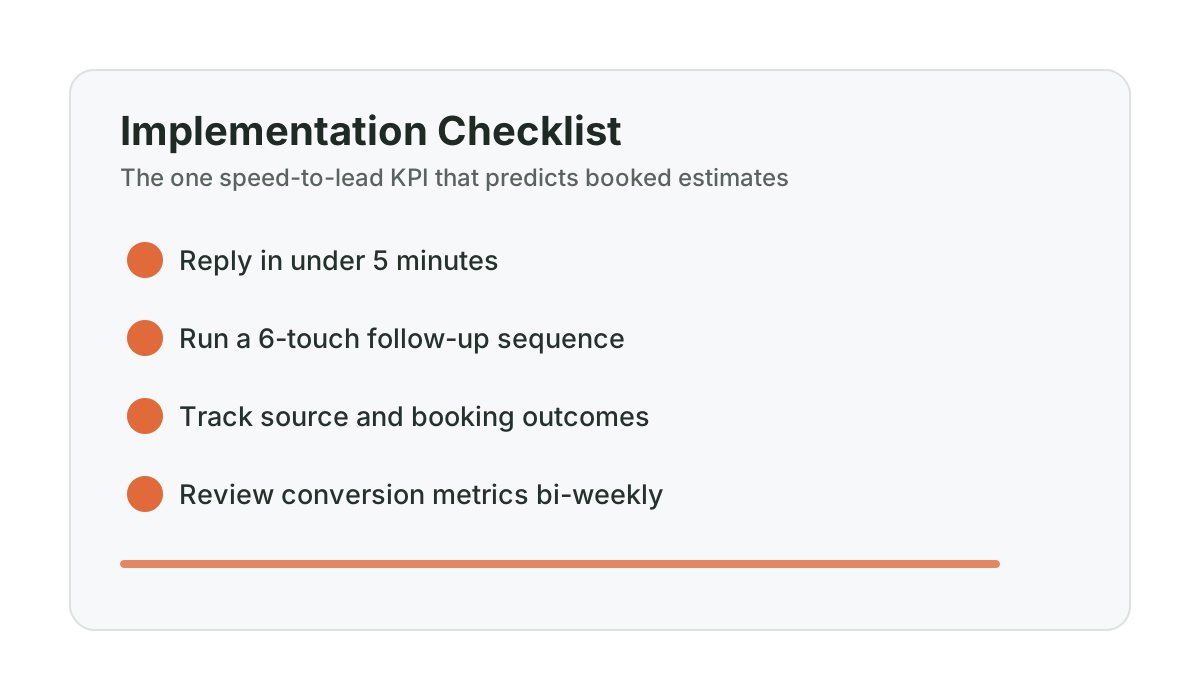
One voicemail is not a contact attempt. It’s a hope. A proper contact sequence for a renovation lead looks like: fast text, call back within the hour, second text the next morning, call on day two, final follow-up on day four. Most contractors stop at step one. That’s where the revenue leak is. Once you do make contact, having a strong follow-up script that doesn’t sound salesy makes the difference between a booked estimate and a dead conversation.
After-hours and weekend coverage
Invoca research found that 27% of calls to home service contractors go unanswered — and a significant portion of those are evenings and weekends when contractors are offline. Source: Invoca, “The State of the Conversation: Call Intelligence for Home Services,” 2022 If you’re not capturing those inquiries, they’re invisible losses — they do not show up in your lead count, so you don’t know to fix them.
Start measuring this week
You can’t improve what you don’t measure. Start with a simple spreadsheet: date, lead source, date of first contact attempt, date of actual contact, date of estimate appointment booked. That’s it. Even two weeks of clean data will show you exactly where leads are falling out of your funnel.
If you’re running more than 15 leads a month, this tracking will almost certainly reveal that your biggest opportunity isn’t more marketing — it’s better contact on the leads you already have.
The next post in this series covers the specific text scripts that recover missed calls: the missed call recovery two-text playbook. And if you want a structured approach to response time across your whole business, read how to build a speed-to-lead SOP when you’re on the job site.
Frequently asked questions
What is a good contact-to-appointment conversion rate for contractors?
For renovation contractors, a contact-to-appointment rate of 50–65% is strong. This means that for every two homeowners you actually reach and speak with, one agrees to an estimate appointment. If your rate is below 40%, the issue is usually the quality of the conversation — how quickly you establish credibility, ask the right questions, and make the next step easy. If your contact rate itself is low, the issue is speed and follow-up persistence before you even get to the conversation.
How many times should I try to contact a lead before giving up?
Research from InsideSales suggests that six contact attempts dramatically outperform one or two attempts in terms of contact rate. For renovation leads, a reasonable sequence is: fast text or voicemail, callback attempt within the hour, follow-up text the next morning, call on day two, and a final check-in on day four or five. After that, leads can go into a longer nurture sequence rather than active outreach. Most contractors stop at one or two attempts — which means they’re leaving a significant portion of their reachable leads on the table.
Should I track leads I couldn’t reach separately from leads I did reach?
Yes — and this separation is important. Leads you couldn’t reach despite multiple attempts represent a different problem than leads you reached but didn’t convert to appointments. Leads you couldn’t reach are usually a speed or channel problem (not responding fast enough or only calling when they prefer text). Leads you reached but didn’t book are usually a conversation quality problem. Mixing these two groups in your metrics will make it harder to identify what to fix first.
Does this metric apply differently to bigger renovation projects?
Somewhat. Whole-home renovations and large additions have longer consideration cycles, so the homeowner may be less urgency-driven than someone looking for a basement reno with a specific timeline. However, the contact rate dynamic still applies — the first contractor to have a real conversation shapes the homeowner’s evaluation criteria, which gives them an advantage in the comparison process regardless of project size. If anything, the longer the cycle, the more important it is to enter the conversation early.
Want help applying this to your pipeline?
Use the matching diagnostic tool first, then book a quick strategy call if you want a done-for-you rollout.

Mashrur Rahman
Founder, ConversionSurgery
I build revenue recovery systems for renovation contractors. After seeing how much money remodelers lose to slow follow-up and missed calls, I built a managed service that handles lead response, estimate follow-up, and after-hours capture automatically. The data in these articles comes from running these systems across real contracting businesses.
Related reading
First-response scripts for Alberta renovation contractors: what to send in the first 60 seconds
A practical 60-second response script library for missed calls, web forms, and inbound SMS in Alberta renovation markets.
Calgary renovation lead response benchmarks (2026): basement, kitchen, and bathroom contractors
Local Calgary benchmarks for response speed, answer rate, and booked estimates so you can see exactly where your pipeline is leaking.
The 7-day speed-to-lead challenge for renovation contractors
Track your actual lead response time for 7 days and you’ll see exactly where you’re losing jobs. Most contractors are surprised by what they find. Here’s the framework.