Why ‘we sent the quote’ is where renovation sales go to die
Updated
Most renovation contractors treat sending an estimate as the finish line. They spend an hour on the job site, another hour building the quote, send it over — and then wait. If the homeowner calls back, great. If they don’t, it’s chalked up to “they probably went with someone cheaper.” That assumption is wrong. Research by Source: Leap (formerly Estimate Rocket), 2023 Home Services Sales Report shows that 60-75% of estimates do not convert to signed contracts, and price is rarely the primary reason. The actual reason: whoever followed up consistently won the job.
Key takeaways
- 60-75% of renovation estimates fail to close — and price is rarely the reason. Inconsistent follow-up is the real killer.
- 80% of closed sales happen between the fifth and twelfth contact, but 44% of contractors give up after just one follow-up.
- A six-touch follow-up cadence over six weeks can meaningfully improve your close rate, adding six figures in annual revenue from leads you already paid for.
- Homeowners don’t go cold because they rejected your estimate — they get busy, have unasked questions, or need a helpful nudge to break decision paralysis.
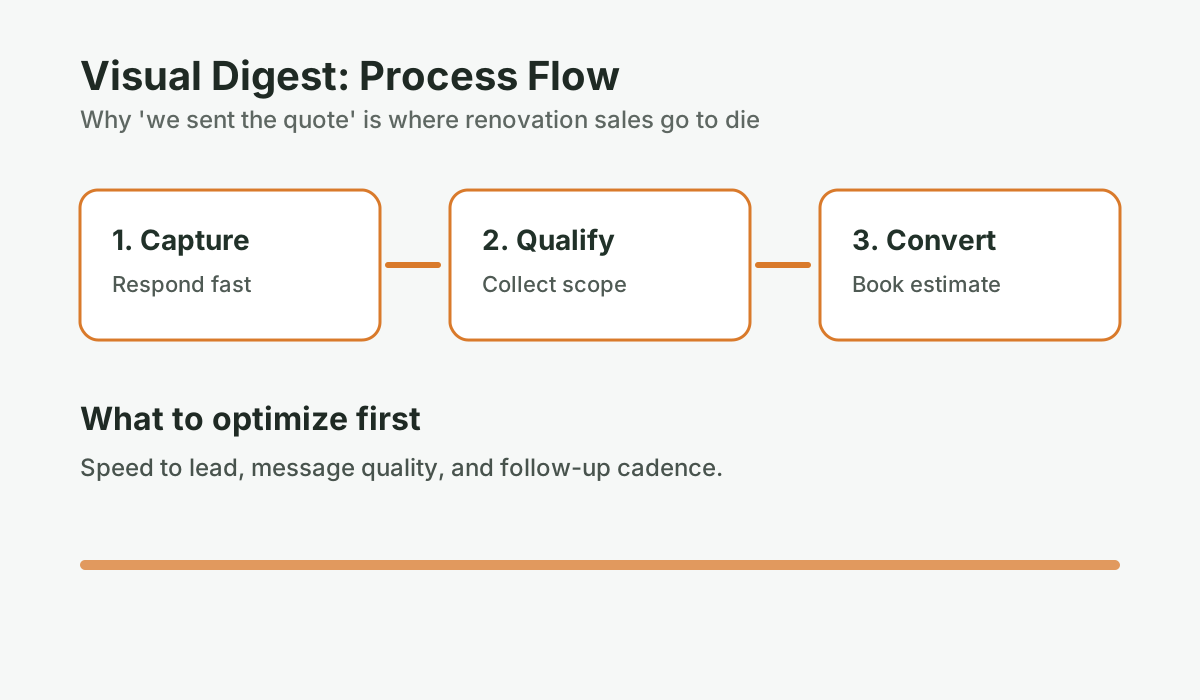
Why the estimate is the starting line — not the finish line
Renovation estimate follow-up is the structured process of re-engaging homeowners after sending a quote — through timed texts, emails, and calls — to answer questions, address concerns, and move the project toward a signed contract.
Think about the homeowner’s situation when your estimate lands in their inbox. They’re comparing you against two or three other contractors. They’re busy — work, kids, the chaos of everyday life. Your estimate is professional and fair, but it’s also just a number on a screen. Without a conversation to reinforce why you’re the right choice, inertia wins. And inertia means they close the tab, get distracted, and eventually sign with the contractor who stayed in front of them.
This is not a pricing problem. It’s a follow-up problem.
According to research published by Source: Brevet Group, “44% of Sales Reps Give Up After One Follow-Up,” 2022, 44% of salespeople give up after a single follow-up. Meanwhile, 80% of closed sales happen between the fifth and twelfth contact. In renovation contracting, where the average project value runs $30,000-$100,000 and homeowners genuinely need time to think, this gap is where revenue disappears.
Why do contractors stop following up after one or two touches?
In industry conversations and field interviews, the pattern is often the same. Contractors send the estimate, maybe shoot a text two days later, get no response, and move on. They tell themselves: “If they wanted the job done, they’d have called.”
That’s a reasonable assumption when you’re buried in your current project. But it’s costing you jobs.
The real reasons follow-up stops:
- They’re physically on a job site from 7 AM to 5 PM — there’s no time to be a salesperson
- Following up feels like pestering, and tradespeople hate the uncomfortable dynamic of chasing someone for a decision
- There’s no system — follow-up exists only as a mental note, and mental notes disappear
- The next estimate is already coming in, and the old one gets buried
None of these are character flaws. They’re structural problems — the business doesn’t have a follow-up system, so follow-up is inconsistent by default. The same pattern shows up with initial lead response: if you’re not answering inquiries quickly, you’re losing jobs before the estimate even happens. That 42-minute response gap is where many leads go cold before you ever get the chance to quote them.
How many follow-up touches do homeowners actually need?
| Follow-Up Touch | % of Contractors Who Reach This Point | % of Sales That Close By This Touch |
|---|---|---|
| Touch 1 (estimate sent) | 100% | ~2% |
| Touch 2 (one follow-up) | ~56% | ~3% |
| Touch 3 | ~27% | ~5% |
| Touch 4-5 | ~10% | ~10% |
| Touch 6-8 | ~5% | ~80% of total closed sales |
Source: Brevet Group, 2022; InsideSales.com, “The Science of Follow-Up,” 2023; adapted for home services context
The math here is brutal in its clarity. Almost all of the sales happen in the follow-up window that almost no contractors reach. If you stop at touch two, you’re leaving the majority of your potential revenue on the table.
What makes homeowners go cold — and what brings them back
Homeowners don’t go cold because they hate your estimate. They go cold because:
- They got busy. A $40K renovation requires real mental energy to commit to. Life intervenes and the decision gets deferred.
- They’re comparing options. They’re waiting on one other quote before deciding. If you disappear, the other contractor wins by default.
- They have unanswered questions. Something in the estimate confused them, or they’re unsure about scope, timeline, or what happens if the project runs over. They didn’t call because they weren’t sure if they were allowed to ask.
- They need a nudge. Making a large financial decision is genuinely difficult. A follow-up message that’s helpful — not pushy — can be the thing that breaks the decision paralysis.
The contractor who follows up with relevant, helpful information — not just “checking in” — signals competence and care. And in a category where homeowners are worried about hiring the wrong contractor, that signal matters enormously.
What happens to your estimates after you send them?
Score your estimate follow-up process. Most contractors stop after one touch. This scorecard shows where your close rate is leaking.
Run the numbers for your business: Score your estimate follow-up. It takes 2-3 minutes and gives you a clear baseline before your next estimate round.
What does effective renovation estimate follow-up look like?
An effective follow-up cadence is a pre-planned sequence of value-driven messages — sent at specific intervals after the estimate — designed to keep you top-of-mind and give homeowners a reason to re-engage at each step.
Effective follow-up is not a sequence of “just wanted to follow up on that quote” texts. It’s a series of value-add touches that each give the homeowner a reason to re-engage. Here’s what that looks like in practice:
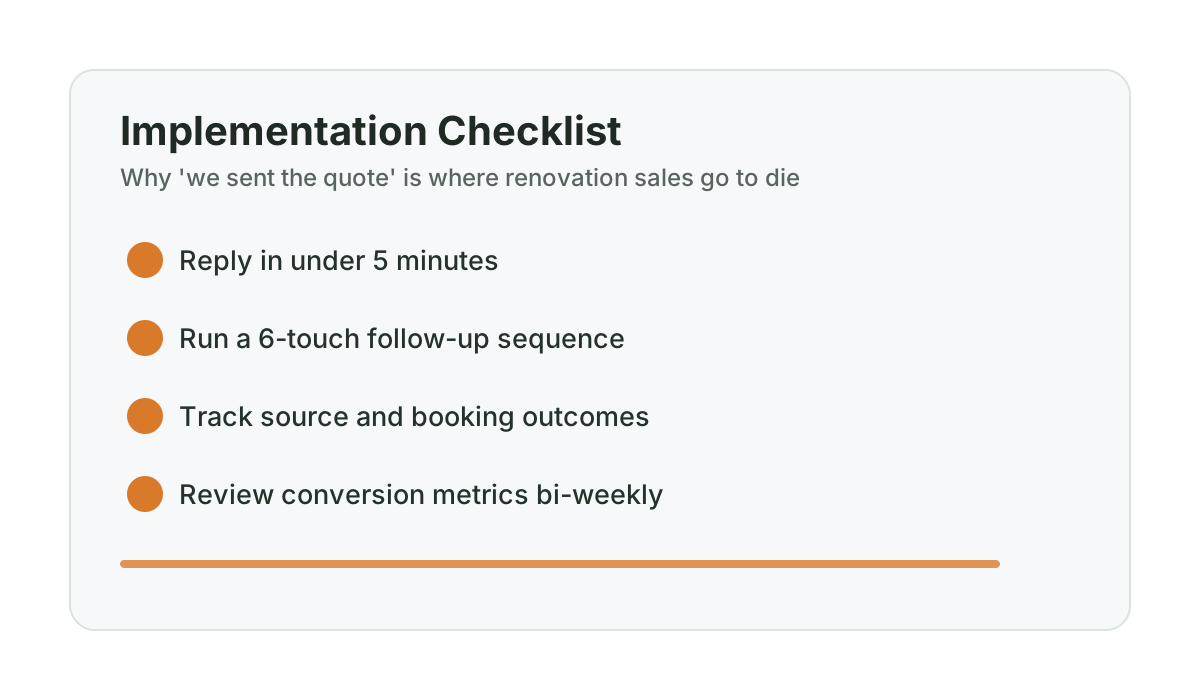
- Day 1 (estimate sent): A brief text confirming they received it and offering to walk through any questions — 30 seconds of their time, not a sales call
- Day 3: Share something genuinely useful — a photo from a similar project, a note about material lead times, or a relevant question about their project that helps them think it through
- Day 7: Check in with context — “I’ve got a slot opening up in the third week of March” is more useful than “just checking in”
- Day 14: Address a common concern — “A lot of homeowners wonder about the disruption during a kitchen reno. Happy to walk through what the week-by-week process looks like”
- Day 21: A genuine question — “Has anything changed on your end, or are you still working through the decision?”
- Day 42: A low-pressure final message that leaves the door open — “I haven’t heard back, so I’m going to close out your file for now. If the timing ever works out, I’d love to help with this project.”
This is a six-touch cadence over six weeks. That’s it. Six messages, each under 50 words. The cumulative effect of that sustained contact is dramatically higher close rates — and the homeowners who do eventually say yes are usually grateful you stayed in touch.
For the exact scripts to use at each of these touches, see Estimate follow-up scripts that don’t sound salesy.
The financial cost of not following up
Let me run a number that most contractors have not actually calculated.
If you’re sending 20 estimates per month at an average project value of $45,000, and your current close rate is 25%, you’re closing five jobs per month and walking away from 15.
Now assume that a consistent six-touch follow-up cadence brings your close rate to 35% — which sits within published benchmark ranges when execution is consistent. That’s seven jobs per month instead of five. Two additional jobs at $45,000 is $90,000 in additional monthly revenue. Annualized: $1,080,000.
That is not a small number. And it’s not revenue that requires a single new marketing dollar to generate — these are leads you already paid for, homeowners who already came to your website or called your number or were referred by a past client. The job acquisition cost has already been spent. You’re just not closing what you started. If you want to see the exact math on what these missed opportunities cost your business, the revenue leak calculator breaks it down by your specific numbers.
Contractors who implement consistent automated follow-up systems typically see measurable close rate improvements — often moving from the 20% to 25% range into the 30% to 40% range. At 20 estimates per month and a $60,000 average project value, even a modest improvement translates to significant additional annual revenue — not from more leads, but from the same leads, handled better.
Why “I’ll do it manually” doesn’t work long-term
I’ve heard contractors say: “I get it, I’ll just be more disciplined about following up.” And they mean it when they say it.
But here’s the problem: disciplined manual follow-up requires that you’re not standing on a job site at 7 AM, that you remember which estimate was sent to which homeowner, that you know exactly which day is Day 7 for the estimate you sent last Thursday, and that you have 20-30 minutes every day to send thoughtful messages instead of generic check-ins.
That’s not a discipline problem. That’s a system problem. The solution isn’t willpower — it’s removing the need for willpower entirely by building a follow-up system that runs automatically, regardless of what’s happening on the job site. This is the same reason buying another app rarely fixes the problem — tools only work when someone consistently uses them, and busy contractors don’t have that bandwidth.
For a step-by-step breakdown of the follow-up cadence that works, read The follow-up engine: a simple cadence that revives “maybe later” estimates.
The contractor who wins is usually not the cheapest — they’re the most persistent
Homeowners hiring renovation contractors are making a decision worth tens of thousands of dollars about a person who is going to be in their home for weeks or months. They don’t make that decision lightly, and they don’t automatically go with the lowest bid.
They hire the contractor who:
- Responded quickly when they first reached out
- Showed up and listened during the estimate
- Stayed in touch in a way that felt helpful, not aggressive
- Made them feel like they’d be taken care of
Persistent, thoughtful follow-up is not sales pressure. It’s evidence that you run a professional operation. And in a market full of contractors who send one quote and disappear, it makes you stand out in the exact way that closes jobs.
“We sent the quote” is not the end of the sale. It’s the beginning. What happens in the next six weeks determines whether that estimate turns into a signed contract or a missed opportunity.
Frequently asked questions
What is the average close rate for renovation estimates?
Industry data suggests renovation contractors close between 20% and 35% of the estimates they send. The wide range reflects the significant impact of follow-up practices — contractors with consistent follow-up systems tend toward the higher end, while those with no formal follow-up process cluster around 20-25%. Research consistently shows that 60-75% of estimates that don’t close were not about price — they were about follow-up failure. Source: Leap Home Services Sales Report, 2023; Brevet Group, 2022
How many follow-up attempts should a contractor make after sending an estimate?
Research on sales follow-up consistently shows that 6-8 touches is the optimal range for high-consideration purchases. For renovation projects — which typically involve $30,000-$100,000 decisions — a cadence of six touches over six weeks is a practical and effective structure. The key is that each touch should deliver some form of value or information, not simply repeat “just checking in.”
Why do homeowners go cold after receiving a renovation estimate?
Homeowners most commonly go cold because they got busy, they’re still comparing options, they have unresolved questions they didn’t feel comfortable asking, or they need time to process a large financial decision. Very rarely is it because they decided against the project entirely. Consistent follow-up addresses all of these scenarios and dramatically improves the chance of conversion.
Is following up too aggressively damaging to the relationship?
Following up with helpful, spaced-out messages is not aggressive — it’s professional. The risk of being “too pushy” only materializes if you contact someone daily or use high-pressure language. A cadence of six messages over six weeks, each with a clear purpose and a short, respectful message, is well within the bounds of normal business communication. Most homeowners who eventually sign appreciate that the contractor stayed in touch.
How much revenue can improved estimate follow-up add for a typical contractor?
The math depends on your volume and average project value, but the impact is often larger than expected. For a contractor sending 20 estimates per month at $45,000 average, improving close rate by even a few percentage points generates substantial additional monthly revenue. Contractors implementing structured follow-up report meaningfully higher close rates, adding significant revenue without any change to lead generation.
Want help applying this to your pipeline?
Use the matching diagnostic tool first, then book a quick strategy call if you want a done-for-you rollout.

Mashrur Rahman
Founder, ConversionSurgery
I build revenue recovery systems for renovation contractors. After seeing how much money remodelers lose to slow follow-up and missed calls, I built a managed service that handles lead response, estimate follow-up, and after-hours capture automatically. The data in these articles comes from running these systems across real contracting businesses.
Related reading
Dormant lead reactivation playbook for slow season (Alberta renovation edition)
Turn quiet months into booked pipeline by reactivating old estimates with a structured, non-pushy cadence.
Track follow-up like a pipeline (and stop losing quotes you already paid for)
A contractor sales pipeline has 5 stages, clear move/close rules, and 3 metrics that matter. Here’s how to stop estimates from disappearing.
No-show to sold: the reminder and reschedule system for in-home estimates
Contractor estimate no-shows waste 2-4 hours per occurrence. A 3-part reminder sequence — 48hr, 24hr, 2hr — cuts no-shows dramatically. Here’s the system.